The Kitchen Health Check

Your Food May Be Healthy. What It Touches May Not Be.

Here's what's touching your food right now:

  • PFAS in your non-stick pans
  • Microplastics in your cutting board
  • BPA in your food containers

This interactive audit scores your kitchen out of 150 and tells you exactly what to fix and in what order.

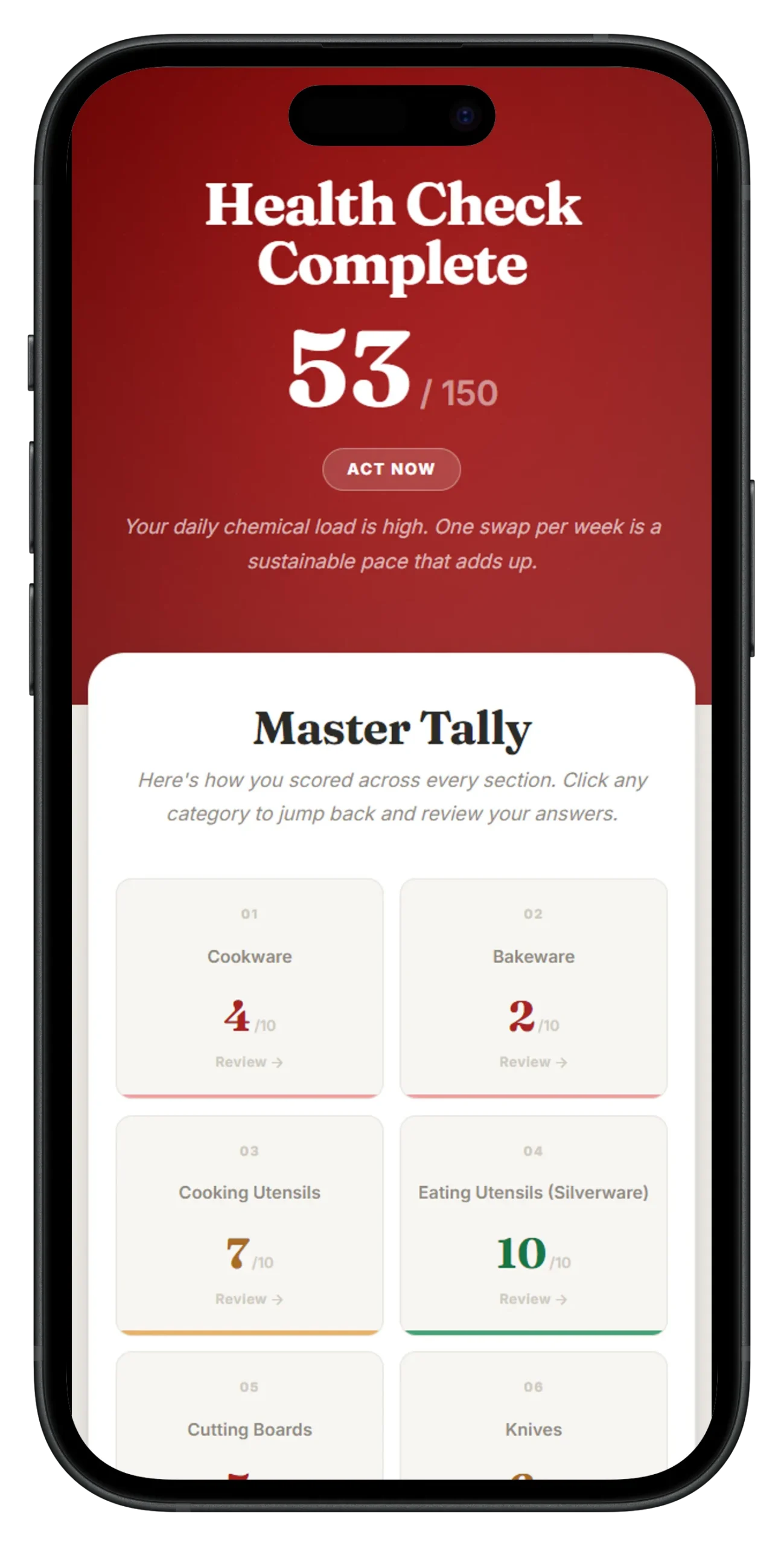
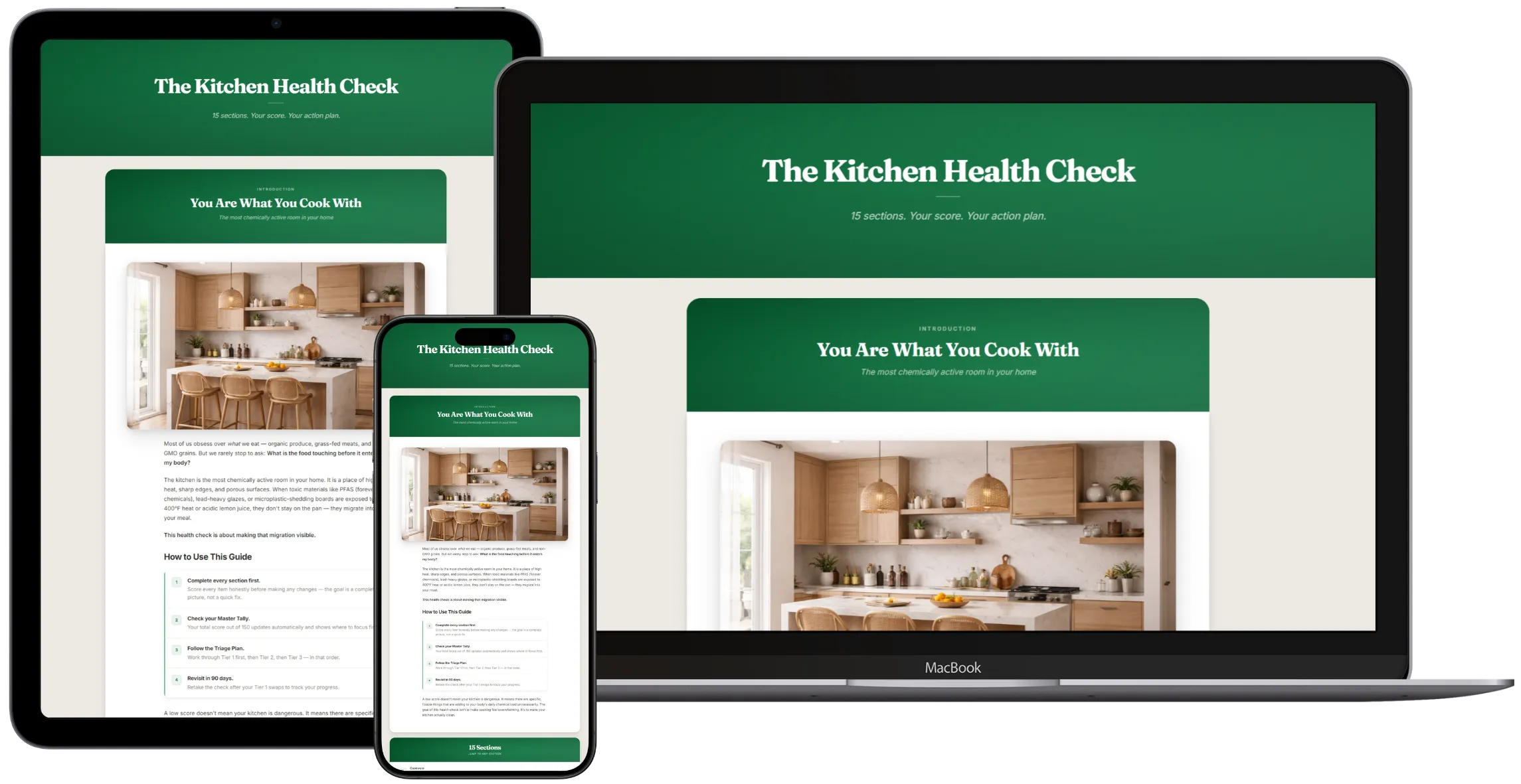
Kitchen Health Check on mobile
Kitchen Health Check on desktop, tablet, and mobile
Get Instant Access 15 scored sections  ·  Master Tally + 90-day plan  ·  60-day refund Don't love it? Full refund within 60 days.
The Problem

Let's be honest about your cooking.

You wake up. You pour coffee from a machine with plastic tubing into a mug you just washed with a scented dish soap. You grab a pan from the cupboard. The coating is starting to flake. You crack eggs on a plastic cutting board. You flip them with a plastic spatula. You pull plastic wrap off a block of cheese and microwave leftovers in a plastic container.

That's breakfast.

Before noon, your food has touched somewhere between 6 and 12 different materials. Non-stick coatings. Plastic utensils. Plastic containers. Plastic wrap. Plastic cutting boards. Aluminum foil. Ceramic-glazed dishes. Rubber seals.

Heat, fat, acid and wear all change how a material behaves against food. That does not make every pan, container or utensil dangerous. It does mean how you use it, and what condition it is in, can matter more than what the label says.

The Kitchen Health Check is about separating the changes worth making from expensive overreaction. And you do it three times a day, every day.
6
to 12 materials your food touches before noon, depending on what you cook.
Non-stick pan

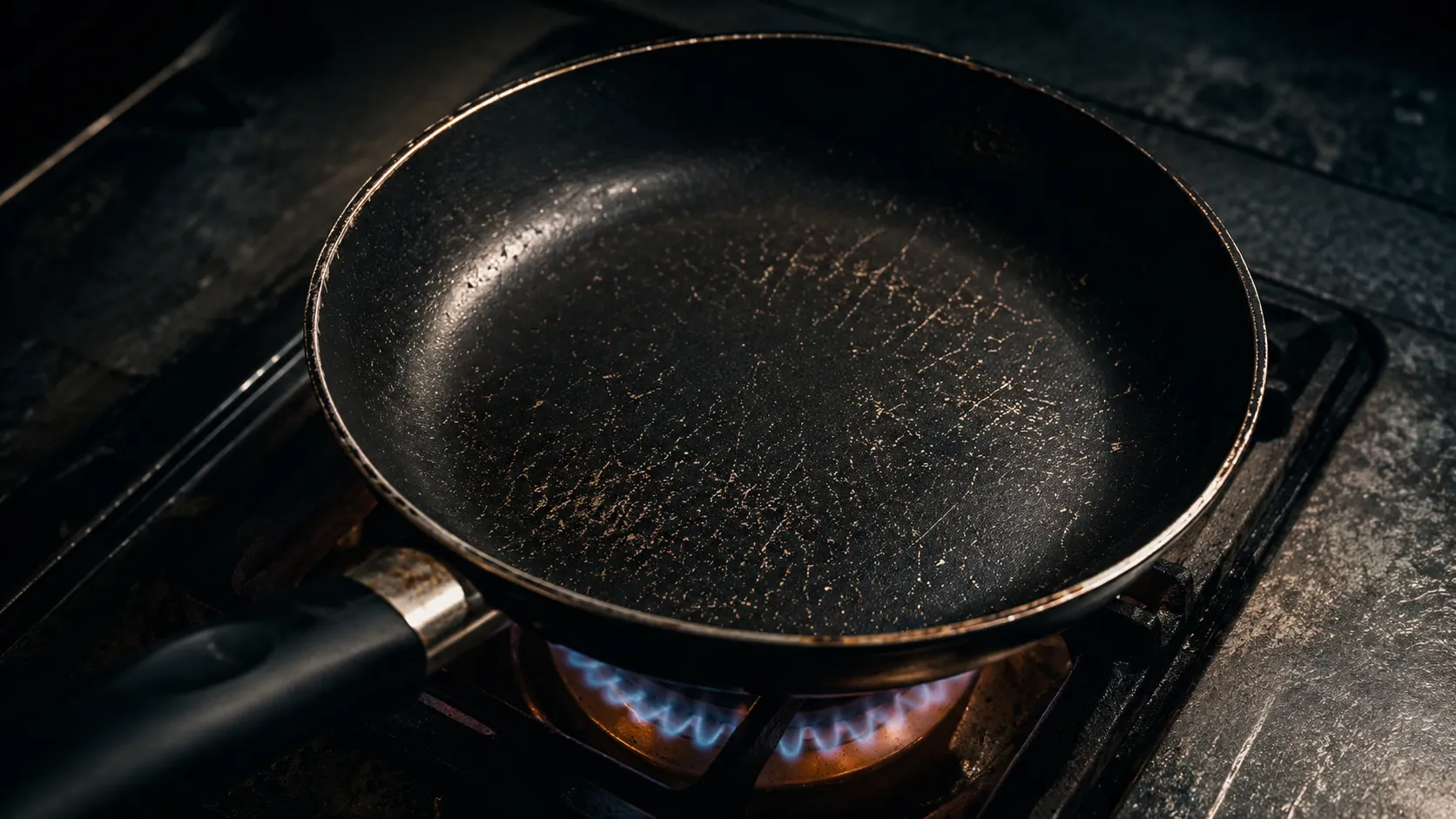
Releasing PFAS forever chemicals into your food at high heat, especially when scratched.

Cutting board

A 2023 study estimated 7.4 to 50.7 grams of microplastic a year from a polyethylene board, at its own assumption of 500 cuts a day.

Food containers

Leaching BPA and its replacements at rates orders of magnitude higher when microwaved.

Coffee maker

Hot water through plastic tubing and reservoirs, before you've said a single word today.

Plastic wrap

Direct contact with food, plasticizers migrating through the film, especially with fatty foods.

Dish soap

Leaving surfactant and synthetic fragrance residue on every dish, pan, and utensil you eat from.

Demo

See exactly how the Health Check works in 60 seconds.

This is one live section from the actual Kitchen Health Check. Answer 10 yes/no questions, get a score, then see what to fix first.

01 / 15

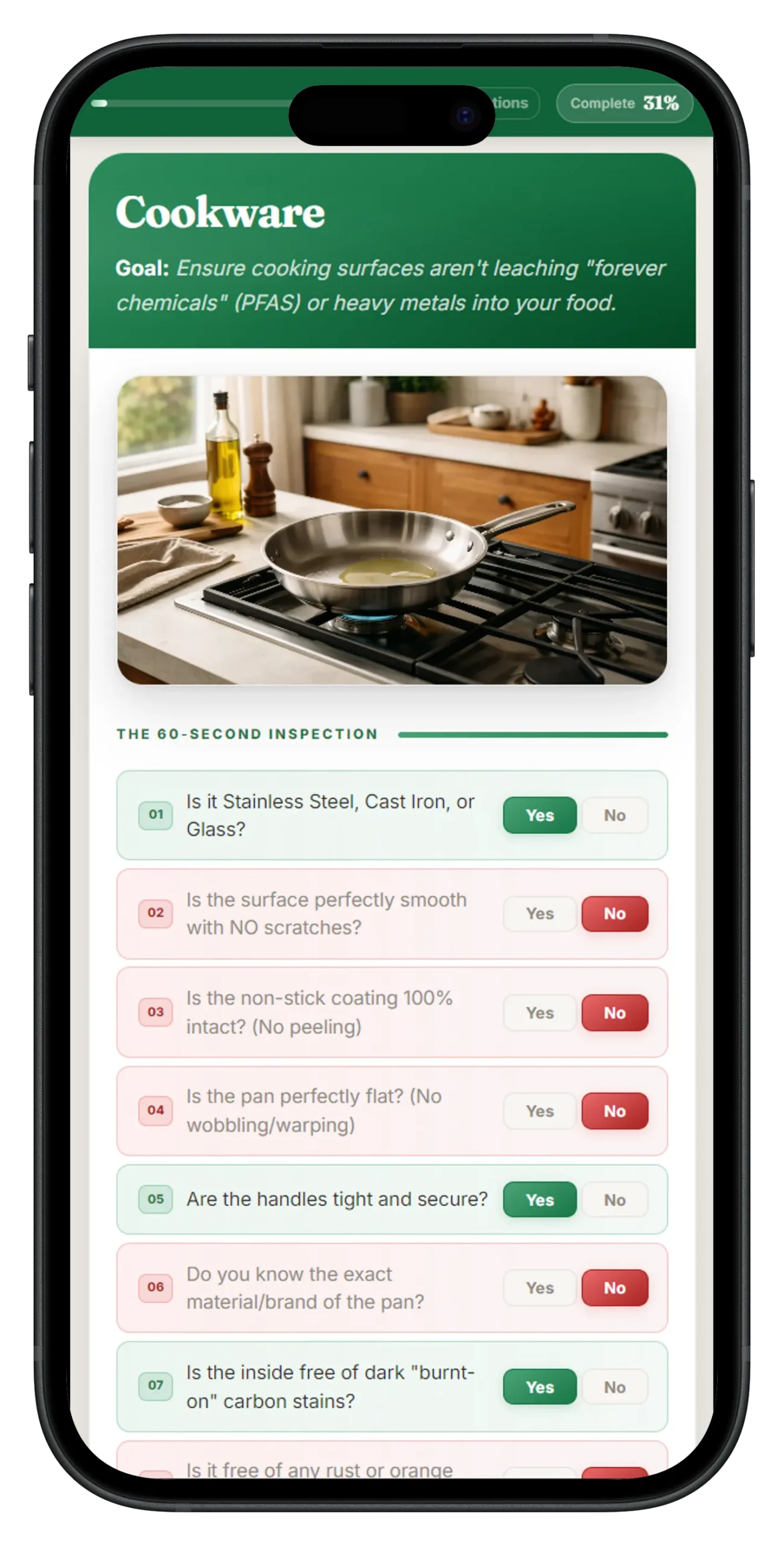
Cookware

Goal: Ensure cooking surfaces aren't leaching "forever chemicals" (PFAS) or heavy metals into your food.

The 60-Second Inspection
  • 01Is it Stainless Steel, Cast Iron, or Glass?
  • 02Is the surface perfectly smooth with NO scratches?
  • 03Is the non-stick coating 100% intact? (No peeling)
  • 04Is the pan perfectly flat? (No wobbling/warping)
  • 05Are the handles tight and secure?
  • 06Do you avoid preheating a coated pan empty on high heat?
  • 07Is the inside free of dark "burnt-on" carbon stains?
  • 08Is it free of any rust or orange "pitting" spots?
  • 09Do you use wood or silicone utensils on coated pans?
  • 10Do you run a fan or open a window when searing on high heat?
/10
Section Score
Answer the questions above to see your rating.
Safe
Caution
Replace
9–10 / 10SAFE. Intact surfaces, sound condition, and cooking habits that keep coatings well below their breakdown temperature.
7–8 / 10CAUTION. Surface fatigue is beginning. Plan a replacement, and tighten up the heat habits in the meantime.
0–6 / 10REPLACE. The coating is damaged, or your habits raise the chance of overheating. Replace visibly peeling pans and never preheat a coated pan empty.
The Science: Why This Matters
  • The PFAS "Off-Gassing": Traditional non-stick pans (Teflon) contain PTFE. When heated above 500°F — which can happen in just minutes on a high flame — the coating begins to break down. Push it hotter still, past about 660°F, and the fumes can cause polymer fume fever — flu-like symptoms that have a medical name because it happens often enough to need one. Keep this in proportion: Germany's Federal Institute for Risk Assessment holds that intact PTFE cookware used normally is not expected to cause adverse effects, and that swallowed coating fragments generally pass straight through. A scratch is a reason to plan a replacement. An empty pan left on high heat is the actual hazard.
  • The Budget Pan Risk: Low-quality or damaged pans can expose bare aluminum or copper directly to food. When these contact acidic ingredients like tomato sauce or lemon juice, metal ions migrate into your meal. Quality clad cookware seals these metals inside stainless layers — cheap or damaged pans don't.
  • Micro-Craters & Bacteria: Microscopic pitting in old stainless steel or scratched coatings acts as a sanctuary for carbonized oils and bacteria, often immune to standard dishwashing — degrading both food quality and hygiene over time.
The "Clean Swap" Roadmap
Best Overall
The Lifetime Stainless Upgrade
5-ply stainless steel gives you a durable, inert cooking surface with no synthetic non-stick coating to wear down over time.
Best for Eggs & High Heat
The Naturally Non-Stick Workhorse
Pre-seasoned cast iron gives you a naturally slick surface once broken in, with no PTFE-style coating to scratch or peel.
Best Lower-Maintenance
The Ceramic-Coated Starter Pan
Ceramic coating is the easier transition option for people who want non-stick performance without traditional PTFE-based cookware.
Full Science + Clean Swaps

Unlock the full Cookware section plus 14 more.

  • The science behind each risk, with citations
  • 3 clean swap picks at every price point
  • 14 more sections + Master Tally out of 150
  • 90-day prioritized action plan
Get Instant Access 60-day refund · Instant access · No app needed

That was one section of fifteen.

The other 14 all go this deep. The cutting board section tells you what the cutting-board study actually estimated, what it assumed to get there, and why wood is not the simple answer it looks like. The food storage container section names which plastics are safe for hot leftovers and which are quietly leaching. The water filter section tells you which filter handles PFAS, which handles lead, and which handle both. The kitchen sponge section explains why the thing you wash your dishes with can reach 54 billion bacterial cells per cubic centimeter, a density researchers compared to a stool sample.

One section gave you a baseline on your cookware. Fifteen give you the complete picture, a master score, and a 90-day plan to fix it.

What It Is

The Kitchen Health Check

A scored audit of everything in your kitchen that touches your food. Cookware to containers, cutting boards to dish soap. Every fix prioritized by actual exposure risk.

For each of the 15 sections, you get:

1

A 60-second self-inspection (10 yes/no questions)

2

A score out of 10, with a Safe / Caution / Replace verdict

3

The actual science behind why it matters, with the research listed

4

Three researched swap options per section, each picked for a different need

5

A pro tip for the thing most people miss

6

At the end: your Master Tally out of 150 + a 3-tier Triage Plan.

Tier 1 · This Week Your lowest-scoring categories first
Tier 2 · This Month Work through the next risk layer
Tier 3 · 90 Days Finish the rest on your timeline

No overwhelm. No "throw everything out." Just a prioritized list, in the right order, so you know exactly what to replace this week and what can wait.

Kitchen Health Check in use Kitchen Health Check results
Get Instant Access

Don't love it? Full refund within 60 days.

What's In Your Food

You don't notice the damage from one meal. You notice it from 1,000 of them.

Three chemical categories your kitchen is almost certainly exposing you to. Where they come from, and what the Health Check does about each.

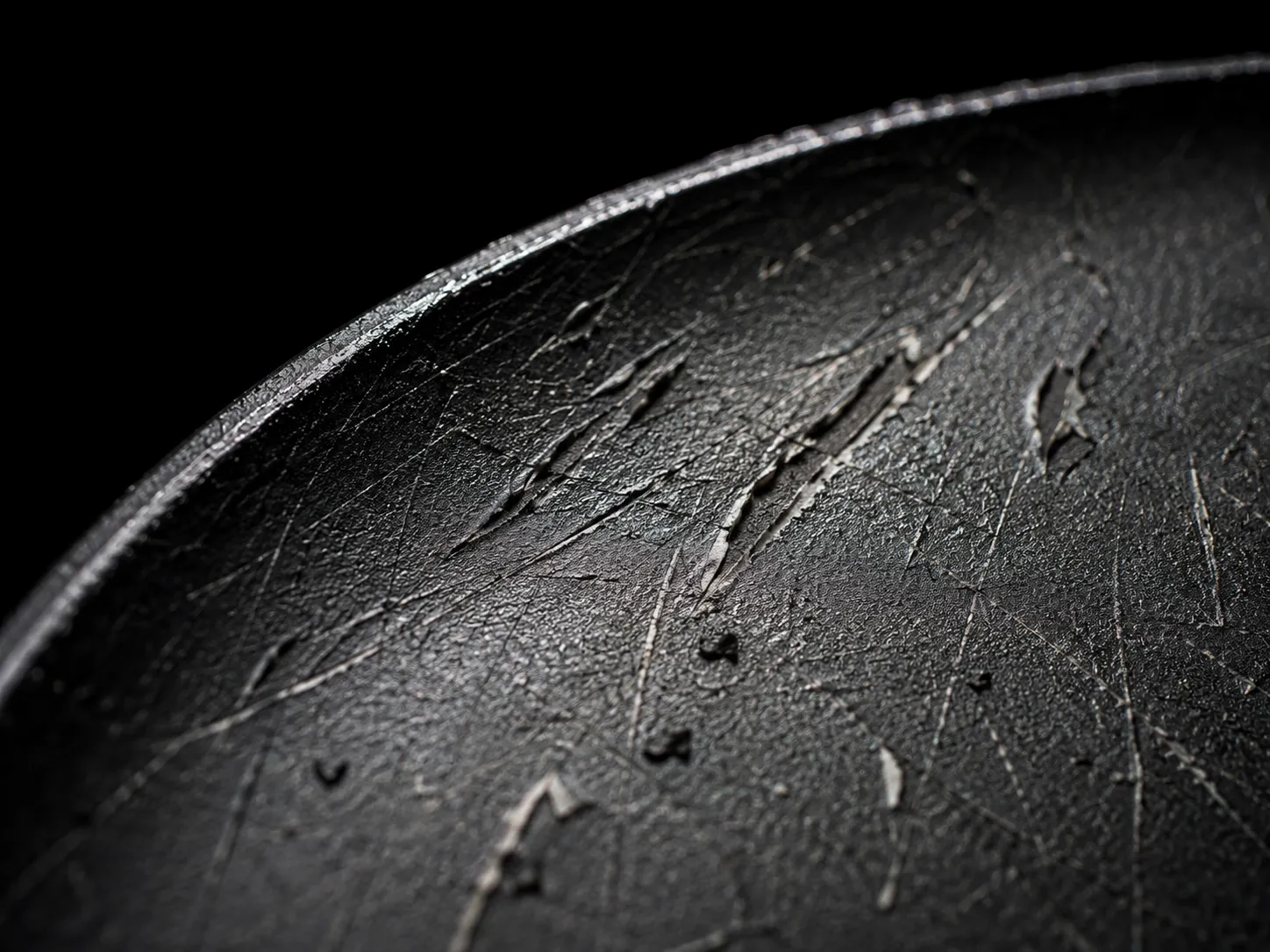
Macro close-up of scratched non-stick pan coating
PFAS
Forever Chemicals
Where it comes from Non-stick cookware, food packaging, microwave popcorn bags
What the Health Check does Identifies which pans are exposing you at high heat and prioritizes the swap.
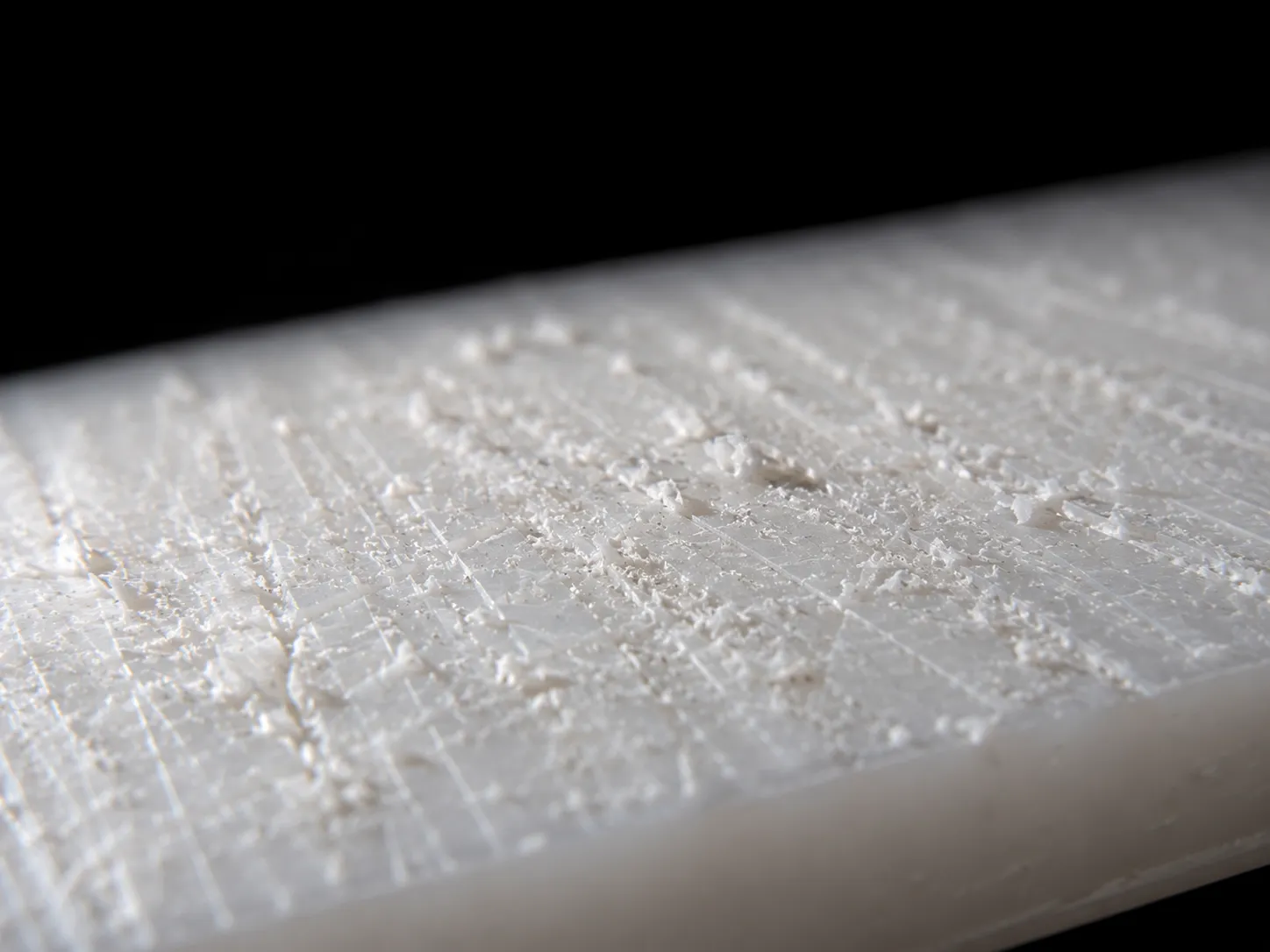
Macro close-up of plastic cutting board score marks
Microplastics
Estimated 7.4 to 50.7g per year, polyethylene board
Where it comes from Plastic cutting boards, utensils, containers, and wrap
What the Health Check does Identifies the habits and worn surfaces most likely to increase intake, and what the study behind the number actually assumed.
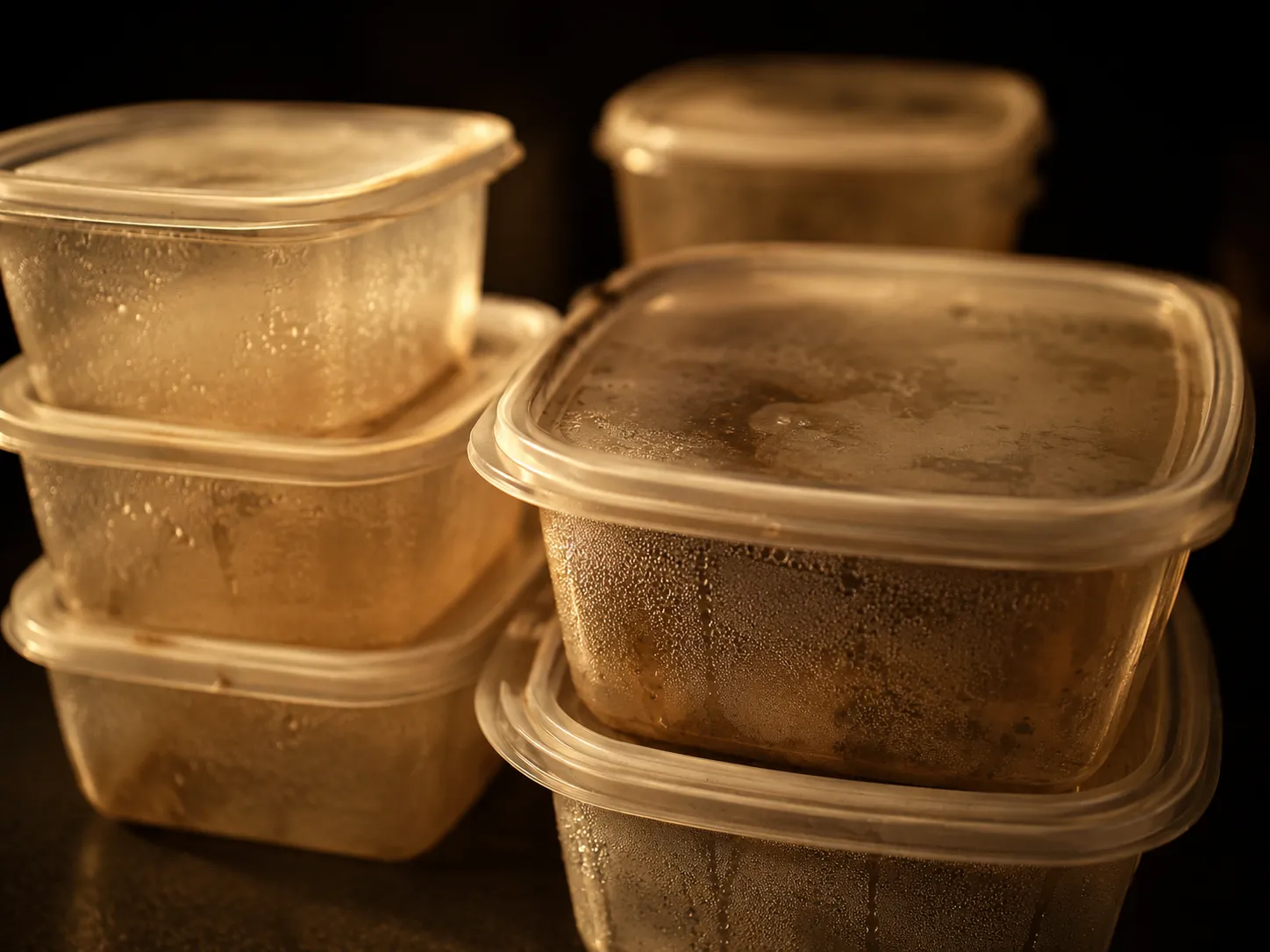
Macro close-up of plastic food storage containers
BPA & Replacements
Endocrine disruptors
Where it comes from Plastic food containers, can linings, "BPA-free" plastic
What the Health Check does Identifies which plastic behaviors are highest-risk and what to do instead.

None of these cause a crisis after one meal. That's not how it works.

Some of them build up. Some pass straight through. The Health Check tells you which is which.

None of this means one meal from a plastic container ruined your health. The value is in finding the repeated exposures you can reduce cheaply, and ignoring the changes that buy you almost nothing.

Why You've Never Heard This

Nobody's told you this because nobody's paid to.

The FDA does regulate food-contact materials, through the Food Contact Notification program. The gap is narrower than the internet suggests, and more specific. Under the "Generally Recognized as Safe" route, a manufacturer can self-determine that a food-contact substance is safe and start using it without ever notifying the FDA. No independent testing is required for that path.

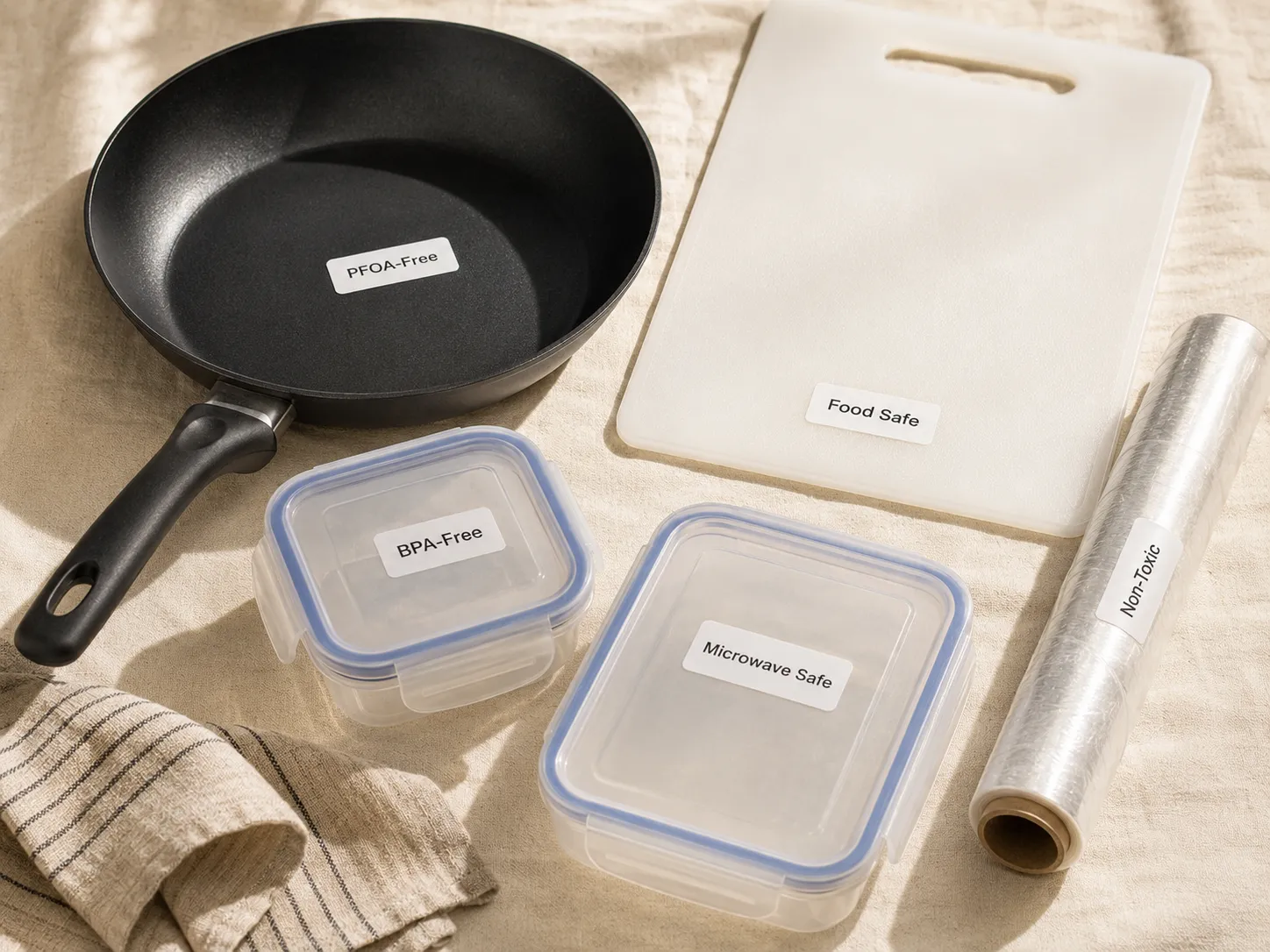
The cookware industry is effectively self-regulated. When PFOA (the original Teflon chemical) was linked to cancer, the industry quietly swapped in other PFAS chemicals that had never been studied. They called the pans "PFOA-free" and kept selling. The EU has started banning entire classes of PFAS. The US has banned a handful.

"BPA-free" is the most famous example of this sleight of hand. Manufacturers removed BPA and replaced it with BPS and BPF, chemicals that behave almost identically in the human body. The label is technically true. The product is effectively the same.

Which leaves you to figure it out yourself. Reading migration studies. Decoding material grades. Sorting through forums. Hoping the reviewer isn't on the brand's payroll.

The Kitchen Health Check is the version of this work that's already done.

Common kitchen items with BPA-Free, Non-Toxic, and PFOA-Free labels

What the label says vs. what it actually means.

What the label says.

  • "Microwave Safe" means the container was tested for melting and for dissolved chemicals leaching above set limits. It was never tested for shedding plastic particles.
  • "Food Grade" is not one certification, and it doesn't imply microwave-safe or dishwasher-safe. The GRAS route also lets manufacturers self-certify a food-contact substance without independent FDA review.
  • "Non-Stick Safe" is not an FDA or EPA designation. Any brand can print it. No testing is required to use it.

What no label tells you.

  • Heat, fat, and acid all accelerate chemical migration. No label accounts for how you actually cook.
  • Wear changes everything. A pan tested new and a pan with a scratched coating are two completely different objects.
  • Cumulative exposure is never measured. Each item is reviewed in isolation. Your kitchen is not.

Stop guessing. Fix what actually matters, in the right order.

Get Instant Access

Don't love it? Full refund within 60 days.

The 15 Sections

What's covered.

Every item in your kitchen that touches your food.

A guided path through the room.

Start with what touches your food directly.

Cookware, cutting boards, utensils, knives, and mixing bowls are treated as the foundation. They're in contact with your food at every meal.

Then check how you store and heat it.

Food storage containers, plastic wrap, aluminum foil, and food packaging get reviewed for chemical migration under heat and pressure.

Finish with what you clean and drink with.

Dish soap residue, water filter type, sponge bacteria load, and coffee maker materials complete the picture.

The full 15-point kitchen review

Cookware
Bakeware
Utensils
Silverware
Cutting Boards
Knives
Mixing Bowls
Food Storage
Plastic Wrap
Foil
Packaging
Dish Soap
Water Filters
Sponges
Coffee Makers
Who This Is For

This Isn't For Everyone.

This is for you if:

  • You want to cut unnecessary food-contact exposure without replacing your whole kitchen
  • You want the research with citations, not another Instagram infographic
  • You've already tried to clean up your kitchen and got overwhelmed halfway through
  • You want a fix list in priority order instead of a panic-buy weekend

Don't buy this if:

  • You want a lab measurement of your personal exposure, or a medical diagnosis
  • You want a shopping list without understanding why
  • You're not willing to spend 45 minutes honestly scoring your kitchen
  • You expect every plastic and non-stick item to be declared dangerous
Three meals a day

You've been eating PFAS, microplastics, and BPA for years. Today's a good day to change that.

Kitchen Health Check 60-Day Money Back Guarantee
Instant Access

Kitchen Health Check

$27 One-time payment · Lifetime access
  • 15 scored sections covering every item that touches your food
  • Master Tally out of 150
  • 3-tier Triage Plan, ranked by your own section scores (this week / this month / 90 days)
  • 3 researched clean swaps per section, each for a different need
  • Major claims sourced, with a full reference list you can check
  • Works on phone, tablet, and laptop. No app, no login
Get Instant Access Secure checkout powered by Stripe
3-Room Bundle

Don't stop at the kitchen. Get all three rooms and save 17%.

Kitchen Health Check product mockup Kitchen

Food Environment

15-Section Audit

Cookware, storage, cleaning products, prep habits, and the room that touches what you eat.

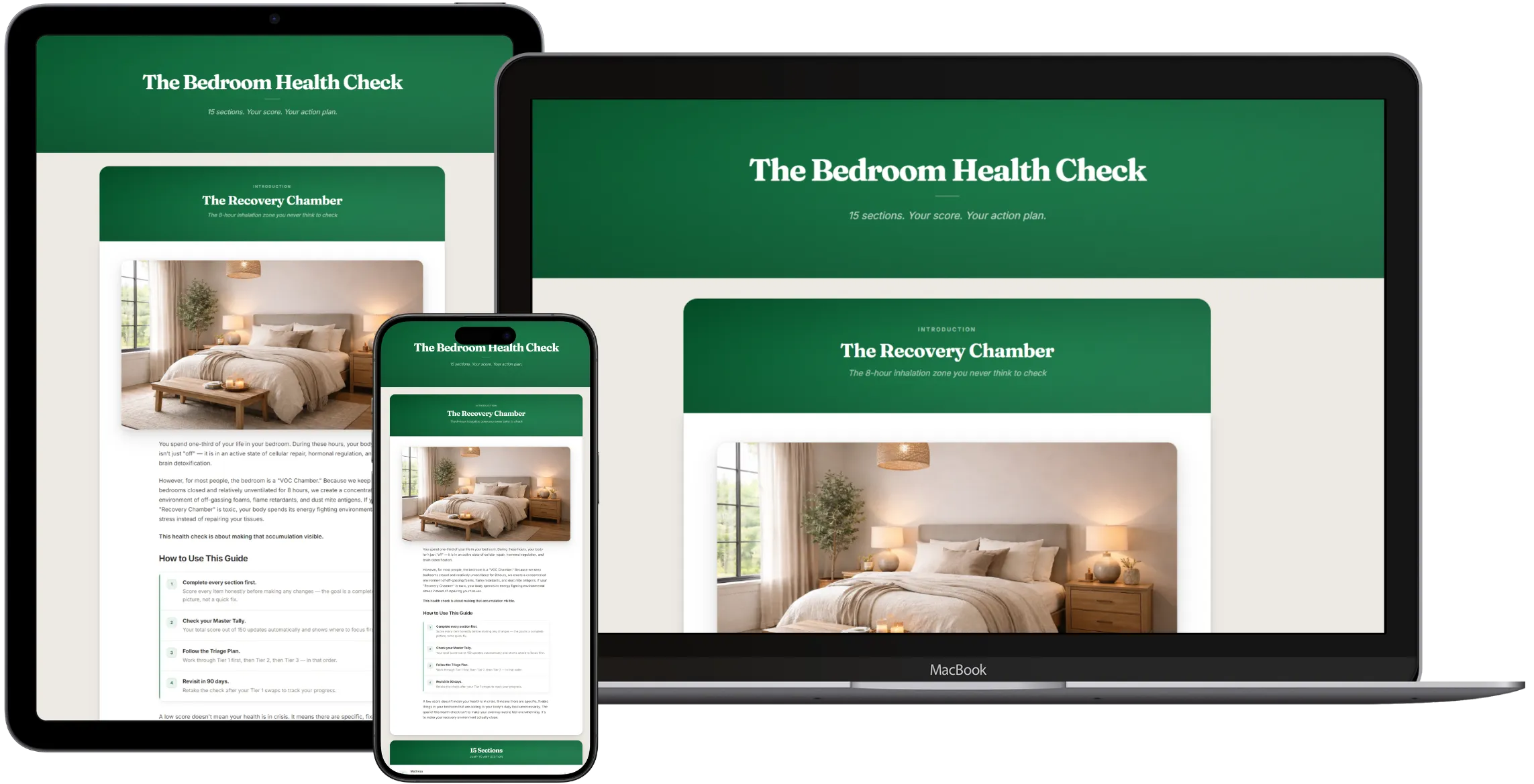
Bedroom Health Check product mockup Bedroom

Sleep Environment

15-Section Audit

Air, dust, fabrics, furniture, bedding, and the room you breathe in all night.

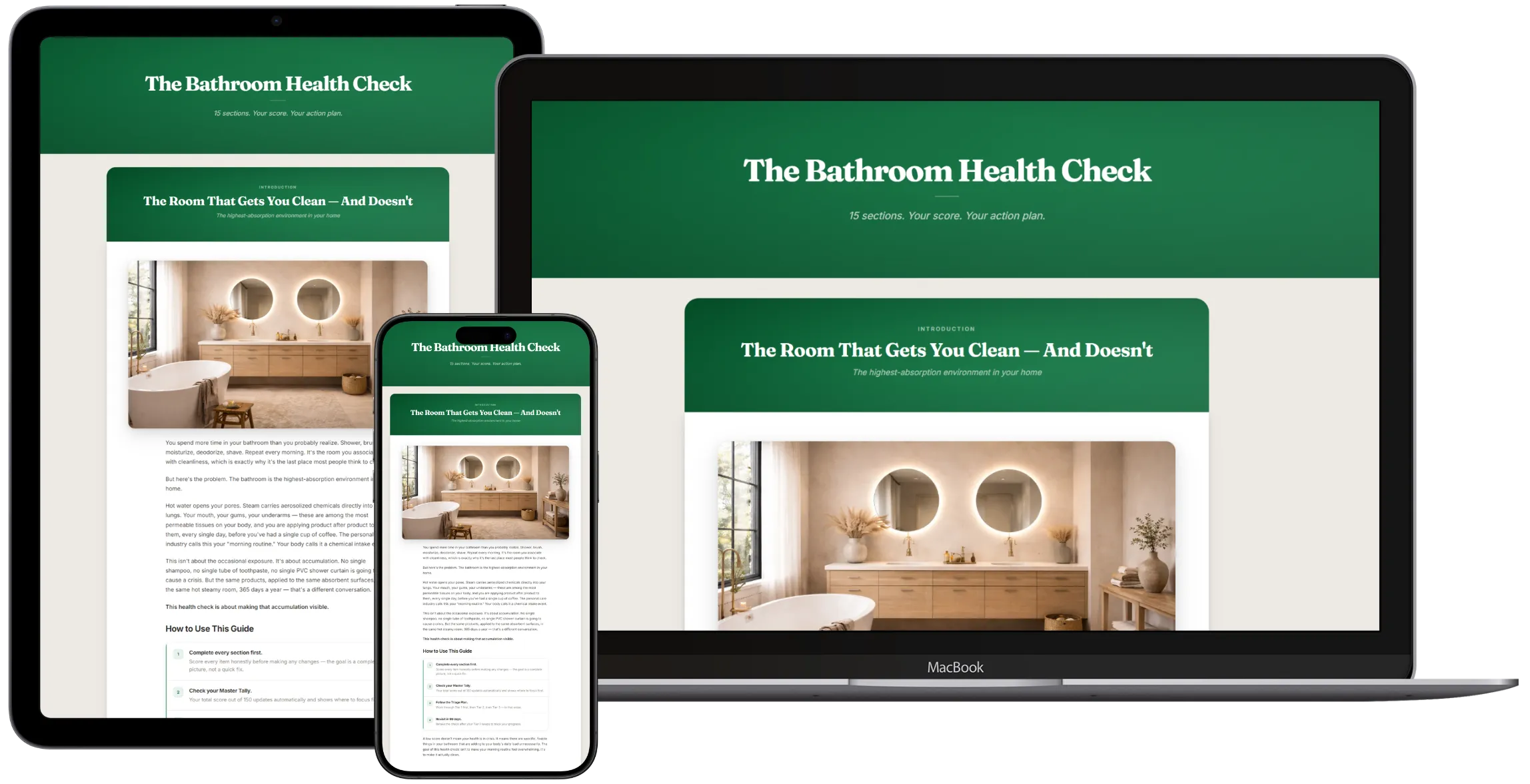
Bathroom Health Check product mockup Bathroom

Skin Environment

15-Section Audit

Water, towels, humidity, surfaces, and personal care products that contact your skin.

3-Room Health Check Bundle

Check where you sleep, eat, and get clean.

Each room gets a 15-section audit, prioritized fixes, practical swaps, and cited guidance, so you know what matters, what to swap, and what to fix first.

Get All Three for $67
Secure checkout powered by Stripe
Bundle Price
$81
$67
Bedroom Health CheckIncluded
Kitchen Health CheckIncluded
Bathroom Health CheckIncluded
60-Day GuaranteeIncluded
FAQ

Quick answers.

Is this for me?

If you want to cut unnecessary food-contact exposure without replacing your whole kitchen; if you want the research with citations, including where it is inconclusive and not another "plastic bad" article; if you are ready to fix things in the right order rather than panic-replacing everything in one weekend: yes, this is for you.

What do I actually get?

Instant access to a web page that works on any device: phone, tablet, laptop, desktop. 15 scored sections, your Master Tally, the 3-tier Triage Plan. No app download. No login. You get a link, you open it, you start.

How long does it take?

About 45 minutes to go through all 15 sections and score yourself. The Triage Plan is designed to execute over 90 days on purpose: Tier 1 swaps this week, Tier 2 this month, Tier 3 over the remaining weeks. Replacing an entire kitchen at once is the fastest way to get overwhelmed and quit.

Are there product recommendations?

Yes. Every section includes 3 researched clean-swap options, each chosen for a different need: usually a best-overall pick, a lower-cost option, and one for a specific use case. They're picked against the criteria in that section, not by commission rate. You don't have to buy any of them. The Health Check is useful without buying a single thing. But when you decide you want to replace something, the vetted options are there.

What if I only care about a few categories?

The scoring is modular. Do just the sections that apply to you. Most people find they score lower on categories they assumed they were fine on, which is usually where the biggest wins are.

What if I don't like it?

60-day no-questions-asked refund. Get in touch through the contact page within 60 days. Money back. No forms, no "what went wrong," no follow-up pitch.

One Last Thing

You've been careful about your food. You've never been careful about what touches it.

Everything in your kitchen that touches your food, scored across 15 sections. Prioritized fixes, backed by the research, given in the order that actually makes a difference.