
Ozempic made GLP-1 famous.
Now everybody wants to know how to increase GLP-1 naturally.
And that is where bitter foods start showing up.
Your digestive system actually contains bitter taste receptors. They are called TAS2Rs, and researchers have found them outside your mouth, including throughout the gastrointestinal tract. Some of these receptors are involved in signaling that can affect hormones such as GLP-1.
That is real.
But before somebody tells you that eating a giant bowl of arugula is basically natural Ozempic, let us slow down.
It is not.
The Short Answer
There is a real biological connection between bitter compounds and GLP-1.
Certain bitter compounds can interact with taste receptors in the gut and influence signaling involving GLP-1 and other hormones involved in appetite and digestion.
What we do not have is strong evidence that eating normal amounts of bitter vegetables will produce the same appetite or weight-loss effects as a GLP-1 medication.
Those are two completely different claims.
Your Gut Has Bitter Taste Receptors
Most people think taste happens on your tongue.
It does not.
Researchers have identified bitter taste receptors, or TAS2Rs, in the gastrointestinal tract. They are part of the chemical-sensing system your body uses to detect compounds that make their way through the digestive system.
Some of these receptors are located on enteroendocrine cells, which are involved in releasing hormones. When certain bitter compounds activate these receptors, they can influence signaling involving hormones such as GLP-1.
That is the actual connection.
It is much more interesting than “bitter food makes you lose weight.”
What Does GLP-1 Actually Do?
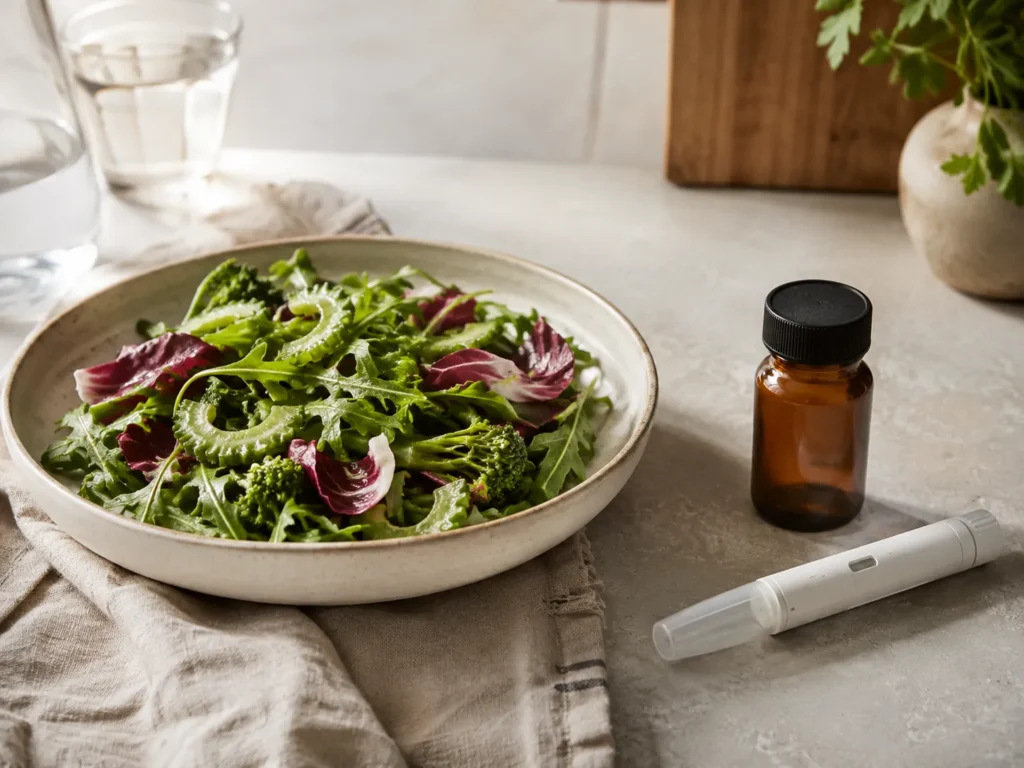
GLP-1 is a hormone involved in appetite, food intake, blood sugar regulation, and digestion.
That is also why drugs that target the GLP-1 system can have such a major effect on appetite and body weight.
But there is a huge difference between stimulating a pathway a little bit and taking a pharmaceutical drug specifically designed to target that pathway.
That is the part people leave out.
Bitter compounds can affect GLP-1-related signaling.
That does not make bitter vegetables equivalent to semaglutide.
Can Bitter Foods Increase GLP-1?
Certain bitter compounds can.
Researchers have found that bitter compounds can affect GLP-1 expression and secretion through specific intestinal bitter taste receptors.
One particularly interesting 2024 study looked at bitter compounds and gut signaling in humans and in intestinal tissue from people with obesity. The researchers found that different bitter compounds could affect GDF15 and/or GLP-1 signaling, with the response depending on the specific receptor and compound involved.
That is legitimately interesting.
But it still does not answer the much bigger question:
Does eating bitter vegetables make people lose weight?
We do not have strong enough evidence to say yes.
Why Are Researchers Interested in Bitter Receptors?
Because these receptors may connect food compounds with the hormones that control digestion, appetite, and metabolism.
Research has found bitter taste receptors in the digestive tract that can interact with compounds such as polyphenols and influence gastrointestinal hormones, including GLP-1.
That opens up some interesting possibilities.
Researchers are looking at whether these pathways could eventually be used to influence metabolic disease, appetite regulation, or other conditions.
But that is research.
It is not a prescription to eat more radicchio.
What About Hops?
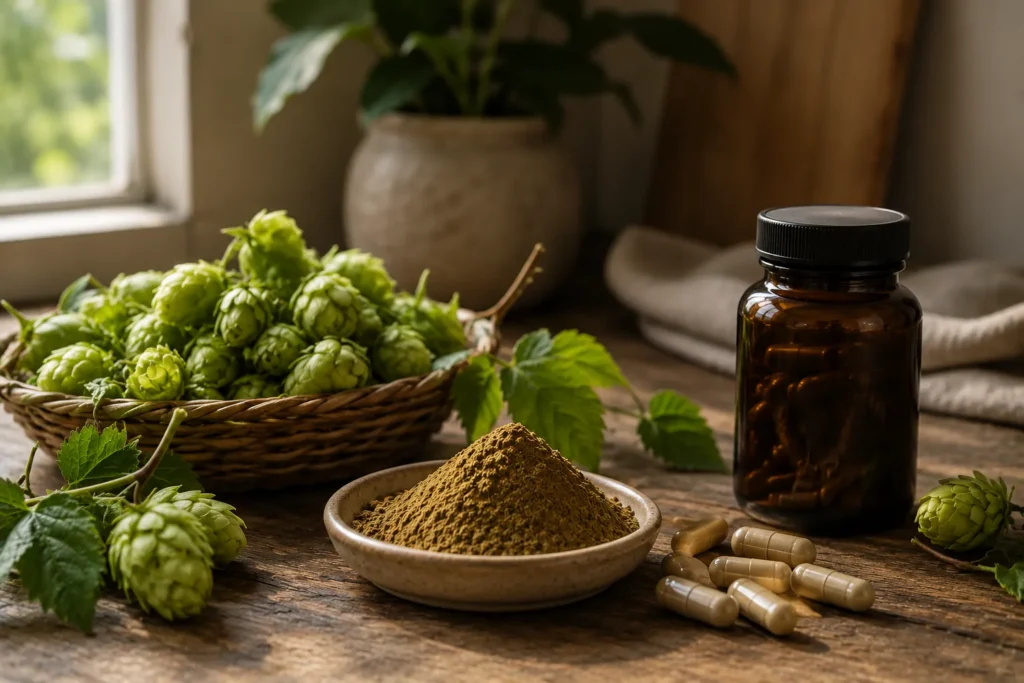
Hops are interesting because they are full of bitter compounds.
Researchers have studied compounds in hops for possible effects on metabolism, body fat, and other health outcomes.
There has even been human research on a standardized matured hop extract. In a randomized, double-blind, placebo-controlled trial involving 200 adults with overweight, the group receiving the hop extract had a greater reduction in visceral fat area after 12 weeks than the placebo group.
That sounds pretty good.
But do not make the mistake of thinking:
“Hops reduced visceral fat, therefore eating bitter vegetables will make me lose weight.”
That is not what the study showed.
It involved a specific standardized extract, not a normal serving of arugula or broccoli rabe.
Interesting evidence?
Yes.
Proof that bitter vegetables are a weight-loss drug?
No.
What Bitter Foods Can You Actually Eat?
This part is easy.
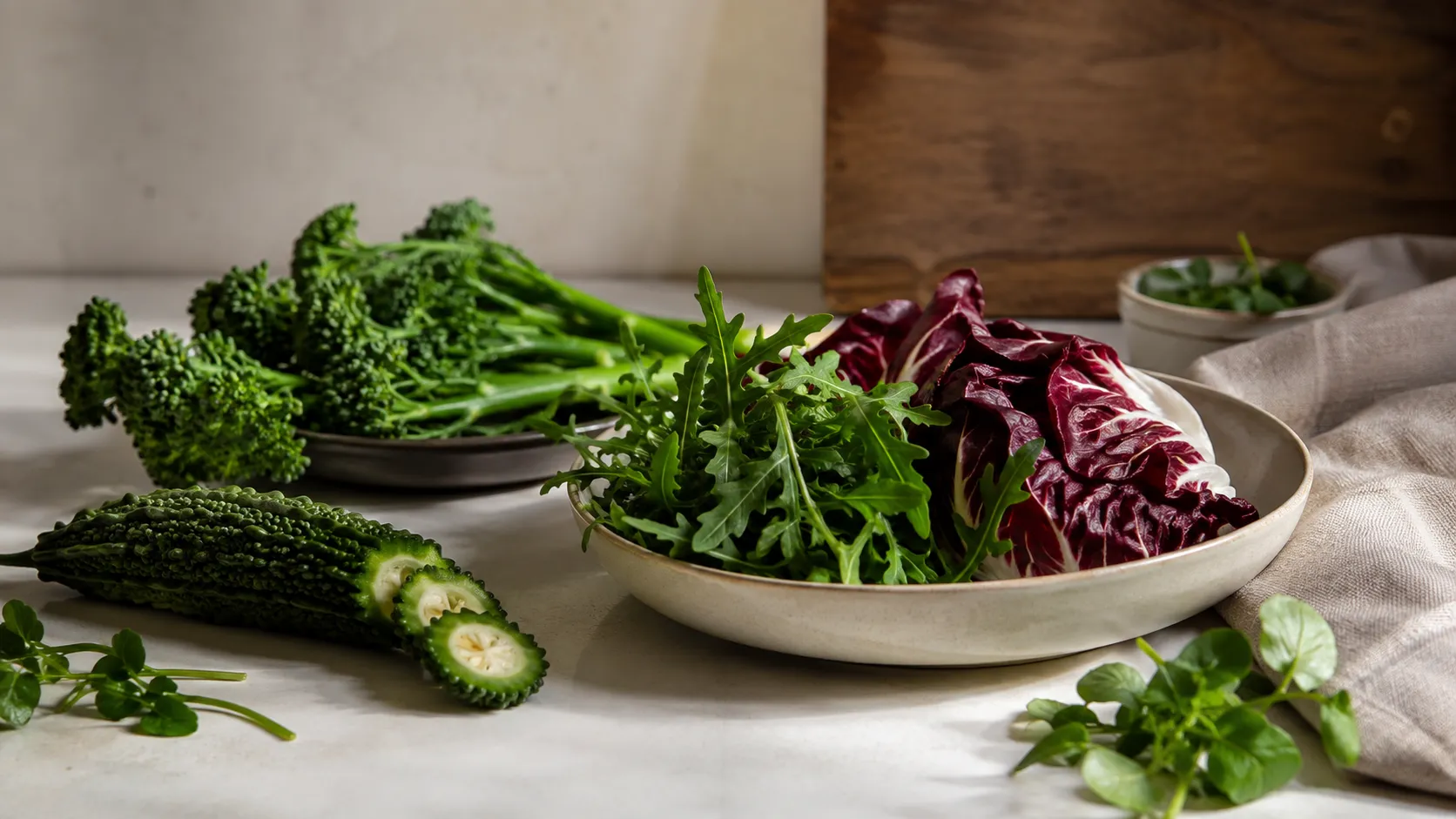
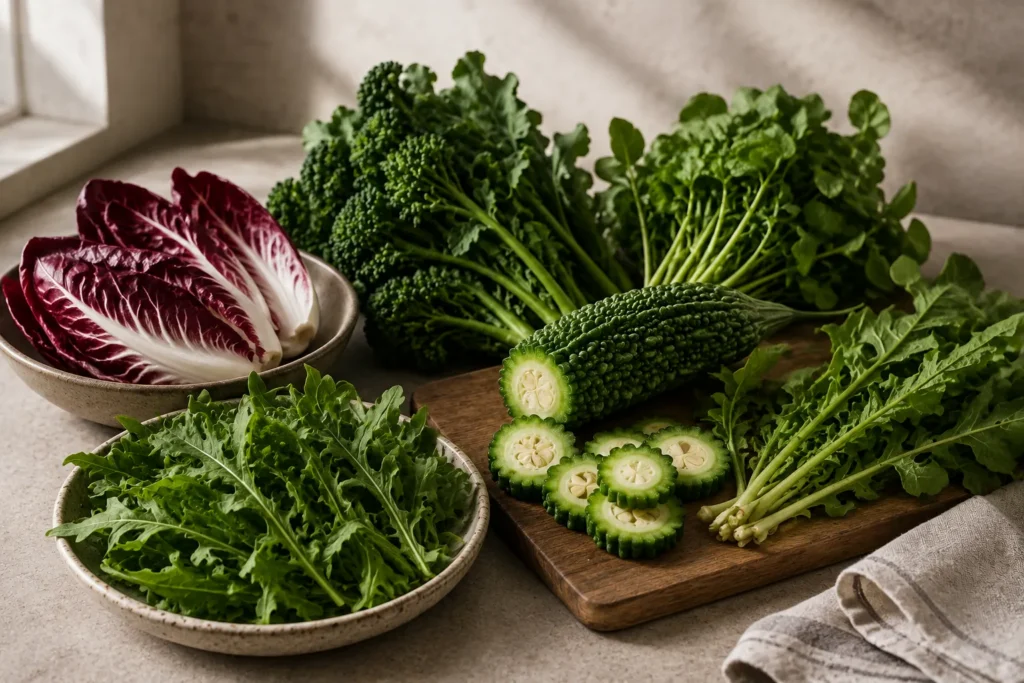
You can get bitter compounds from normal foods like arugula, radicchio, chicory, broccoli rabe, watercress, dandelion greens, and bitter melon.
These are not some crazy wellness foods.
They are just plants.
And there is already a pretty good reason to eat more of them: they are nutrient-dense foods that add variety to your diet.
You do not have to pretend they are going to turn on some magical fat-burning switch.

The 5 most toxic items in your bathroom, kitchen, and bedroom.
Find out which to fix first, free.
Instant access. No account needed.
Why Do Most People Hate Bitter Foods?
Because most people eat food that tastes good.
And by “good,” I mean sweet, salty, fatty, and highly palatable.
Modern food is extremely good at making you want to keep eating it.
Then somebody hands you a plate of radicchio and you are wondering why dinner tastes like punishment.
That does not necessarily mean your body hates bitter foods.
You are probably just not used to them.
Taste preferences can change.
Start small. Put some arugula into a salad. Add a little radicchio. Roast broccoli rabe with olive oil and garlic.
You do not need to go from zero bitter foods to eating an entire plate of dandelion greens.
Your stomach might have opinions.
Can Bitter Foods Help With Weight Loss?
This is where I would be careful.
The biology is interesting. Bitter receptor activation can influence pathways involved in appetite and gut hormone signaling, and some specific bitter compounds have shown promising results in research.
But we do not have enough evidence to say that simply eating bitter foods causes meaningful weight loss.
And honestly, I do not think you need that claim.
Eat bitter vegetables because they are nutritious foods.
If researchers eventually prove that certain bitter compounds have meaningful effects on appetite or metabolism in humans, great.
Until then, do not turn a salad into a pharmaceutical drug.
What About Bitter Melon?
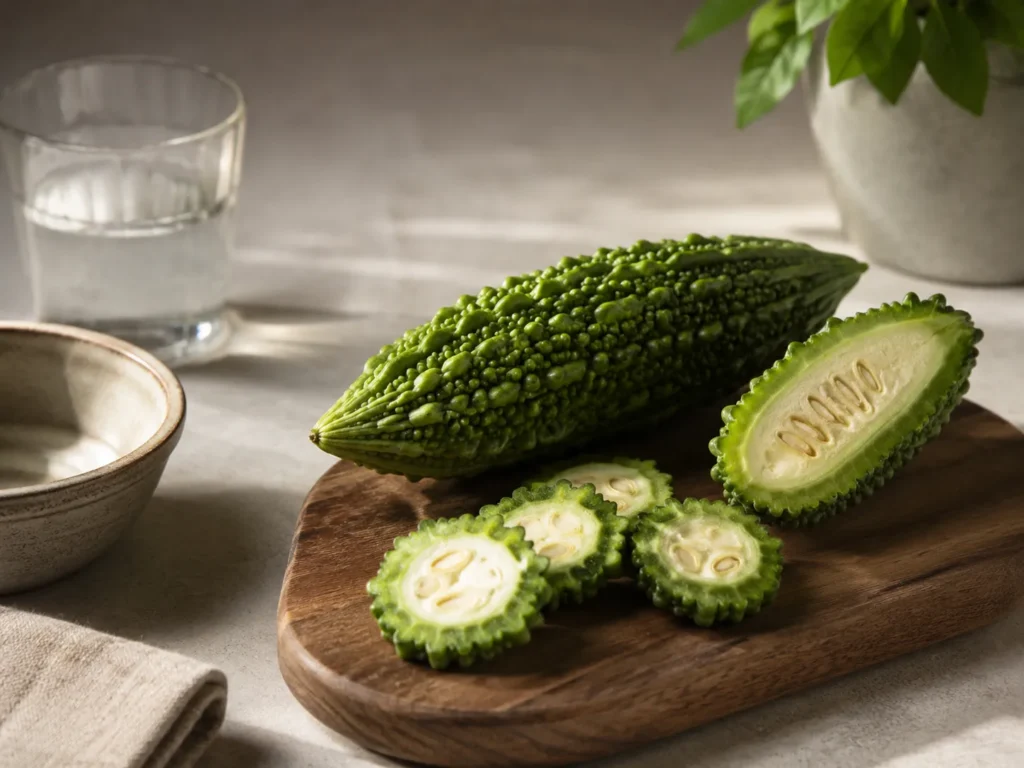
Bitter melon gets a lot of attention because researchers have studied it for possible effects on glucose metabolism and other metabolic outcomes.
That is interesting.
But the same rule applies.
A food being studied for a possible metabolic effect does not mean it has been proven to treat diabetes or cause weight loss.
Interesting does not mean proven.
What About Berberine?
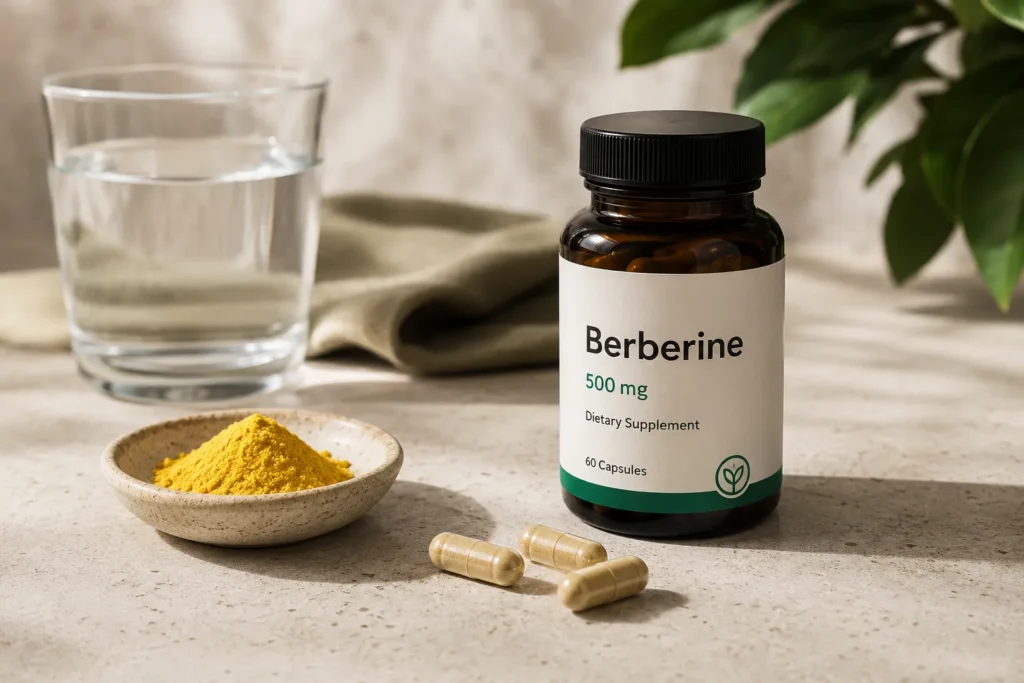
This gets mixed into the conversation all the time.
Berberine is a specific bioactive compound commonly sold as a supplement.
A bitter food is not the same thing as taking a concentrated berberine supplement.
Something tasting bitter does not automatically mean it contains berberine.
And it certainly does not mean the food will produce the same effects as a supplement containing a much larger dose of an isolated compound.
Do not confuse the two.
Are Bitter Foods Natural Ozempic?
No.
This really should not be controversial.
GLP-1 medications are pharmaceutical drugs specifically designed to activate the GLP-1 receptor and produce a strong, sustained effect.
A bitter vegetable is food.
There may be some overlap in the biological pathways involved.
That does not make them equivalent.
Calling a salad “natural Ozempic” is just marketing bullshit.
Frequently Asked Questions
What foods increase GLP-1 naturally?
There is not a proven food that increases GLP-1 enough to reproduce the effects of a prescription GLP-1 medication. Certain bitter compounds can interact with intestinal receptors involved in GLP-1 signaling, but the real-world effects of normal foods are still being studied.
Do bitter foods increase GLP-1?
Certain bitter compounds can influence GLP-1 signaling through intestinal bitter taste receptors. However, that does not mean eating bitter vegetables produces a large or clinically meaningful GLP-1 effect in humans.
What are the best bitter foods?
Arugula, radicchio, chicory, broccoli rabe, watercress, dandelion greens, and bitter melon are all naturally bitter foods.
Can bitter foods help you lose weight?
There is an interesting biological connection between bitter receptors, gut hormones, and appetite, but there is not enough evidence to say that eating bitter foods by itself causes meaningful weight loss.
Are bitter foods natural Ozempic?
No. Bitter foods may influence some of the pathways involved in GLP-1 signaling, but they are not equivalent to GLP-1 medications.
Why are bitter taste receptors important?
Bitter taste receptors help detect compounds throughout the body, including in the gastrointestinal tract, where they can influence gut hormone signaling and other physiological processes.
The Takeaway
Your gut has bitter taste receptors.
Certain bitter compounds can activate them, and those receptors are connected to pathways involving GLP-1, appetite, digestion, and metabolism.
That is real.
What is not proven is that eating bitter vegetables will make you lose weight or give you anything close to the effect of Ozempic.
So eat the arugula.
Eat the radicchio.
Try the bitter melon.
They are good foods.
Just do not call your salad Ozempic.
Sources / Research Notes
Primary research and reviews on intestinal TAS2Rs, bitter compounds, GLP-1 signaling, and matured hop extract.