

If you trip, what saves you is not your bench press.
It is how fast you can catch yourself.
That is muscle power.
And it is something most people barely think about until they start losing it.
Muscle power is your ability to produce force quickly. Research shows that it declines earlier and often faster with age than muscle strength, and low muscle power is strongly associated with problems like mobility limitations, disability, and loss of independence.
That is a pretty big deal.
Because getting older is not just about how much weight you can lift. It is about whether your body can still react when life does not go according to plan.
What Is Muscle Power?
People constantly use strength and power like they are the same thing.
They are not.
Strength is how much force you can produce. Power is how quickly you can produce it.
You can be very strong and still be relatively slow.
Think about what happens in real life.
Catching yourself when you trip.
Stepping quickly onto a curb.
Getting up from a chair.
Climbing stairs.
Grabbing a handrail before you fall.
Those movements are not just about having enough strength. They are about producing that force quickly enough.
That is power.
Muscle Power Declines Earlier Than Strength
This is where things get interesting.
Muscle power tends to decline earlier and more rapidly with aging than muscle strength. Researchers believe part of the reason is that aging affects the fast-twitch muscle fibers and neuromuscular systems that help you produce force quickly.
Longitudinal research has found that maximum muscle power declines with age and that the decline becomes increasingly related to losses in both force and movement speed as people get older.
That is why waiting until you are old to think about power is dumb.
It is not something that suddenly disappears at 70.
The decline starts much earlier.
Why Muscle Power Matters for Longevity
Here is where people get interested in the longevity connection.
Low muscle power has been associated with mortality and other poor health outcomes in older adults. But you need to be careful with that statement because an association does not prove that low power itself causes someone to die earlier. It may also be a marker of overall health and physical function.
That is still important.
Think about what low power actually means.
You are slower getting out of a chair.
You are slower climbing stairs.
You do not react as quickly when you trip.
You become less confident moving around.
You start doing less because movement feels harder.
Then you lose even more physical capacity. That is a pretty shitty cycle.
The Six-Times Number Needs Some Context
You may have seen headlines saying that people with poor physical performance had a six times higher risk of dying.
That finding is real, but it is not a study showing that muscle power by itself makes you six times more likely to die.
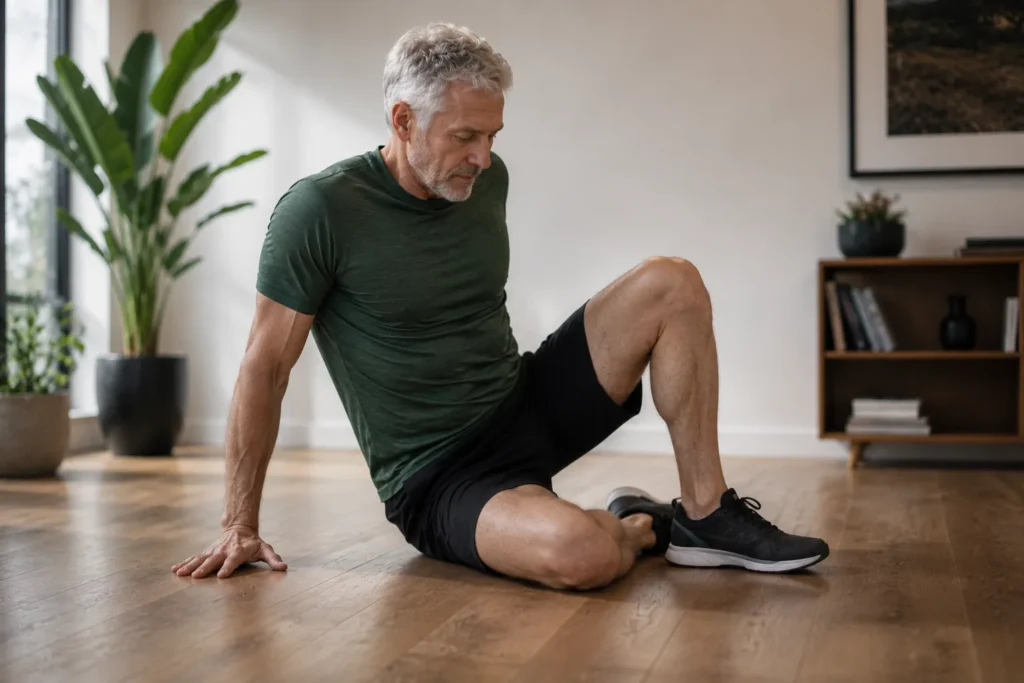
The number comes from research using the sitting-rising test, where adults were scored on their ability to sit down on the floor and stand back up without using their hands. The test captures several things at once, including muscle power, strength, balance, flexibility, and body control. People who performed poorly had substantially higher mortality risk than those who performed well.
That is still interesting.
It just is not the same thing as saying:
“Your muscle power alone determines how long you live.”
It does not.
Why Power Matters in Real Life
This is where I think the concept actually becomes useful.
Gym strength is easy to measure.
How much can you bench?
How much can you squat?
How much can you deadlift?
Fine.
But daily life does not happen on a controlled barbell with three minutes of rest between sets.
You trip.
You slip.
You drop something.
You have to move quickly.
Your body does not ask you how much you can deadlift.
It asks whether you can react fast enough.
That is why muscle power is so important for maintaining physical function as you age. Research consistently identifies lower-body power as an important factor in mobility and independence in older adults.

The 5 most toxic items in your bathroom, kitchen, and bedroom.
Find out which to fix first, free.
Instant access. No account needed.
Most People Train Strength and Ignore Power
This is the mistake.
A lot of people lift weights.
Some people run.
Some people do classes.
All of that is fine.
But being generally active does not automatically mean you are training the ability to produce force quickly.
Traditional strength training focuses heavily on producing force.
Power training adds the speed component.
That is an important difference.
And because power appears to decline earlier and faster than strength, maintaining it should probably be part of how we think about aging well.
You Need A Strength Base First

This does not mean you should immediately start doing random box jumps and trying to move like an Olympic athlete.
Build strength first.
You need enough control and strength to perform explosive movements safely and correctly.
Once you have that foundation, you can start adding movements that emphasize speed and power.
That might include:
Jumping.
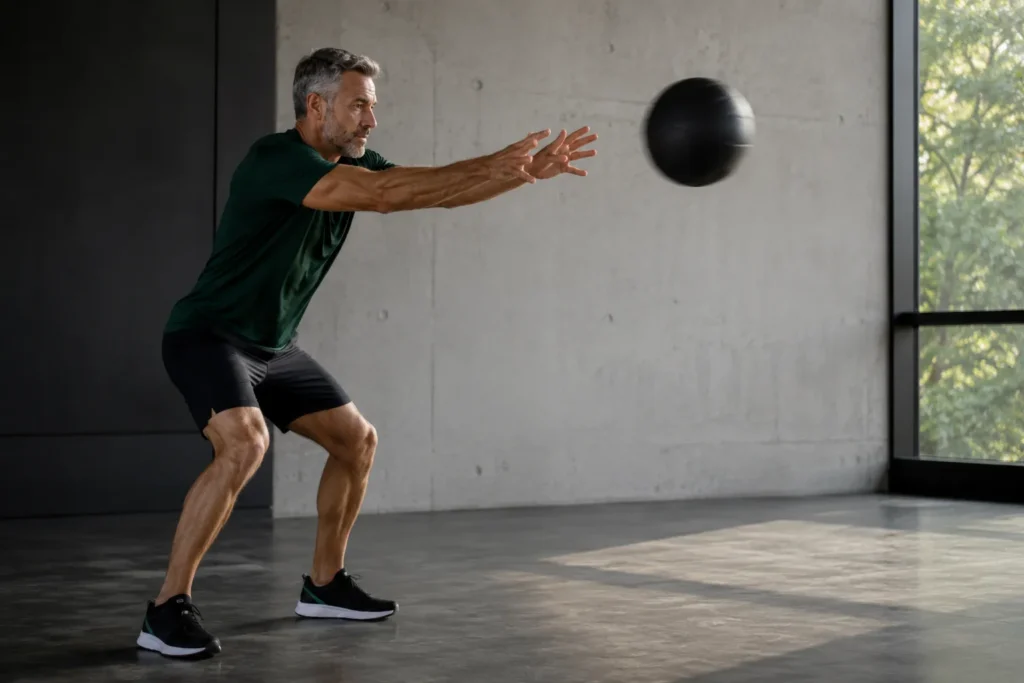
Medicine-ball throws.
Fast but controlled resistance-training repetitions.
Short sprints.
Explosive step-ups.
Other power-focused movements appropriate for your fitness level.
The exact exercise matters less than the principle: produce force quickly.
Power Training Is Not About Getting Exhausted
This is another thing people get wrong.
Power work is not supposed to be a cardio workout.
You are trying to move quickly and produce force.
If you are so exhausted that every repetition becomes slow and sloppy, you are not really training power anymore.
You are just tired.
That is why power exercises are usually performed with enough rest that you can actually move with speed and control.
The goal is not:
“How destroyed can I get?”
The goal is:
“How fast can I produce this movement correctly?”
Very different workout.
You Do Not Have To Be An Athlete
This is not just for people who play sports.
Honestly, the older you get, the more useful the concept becomes.
You do not need to jump onto a 30-inch box.
You do not need to clean 200 pounds.
You do not need to sprint like Usain Bolt.
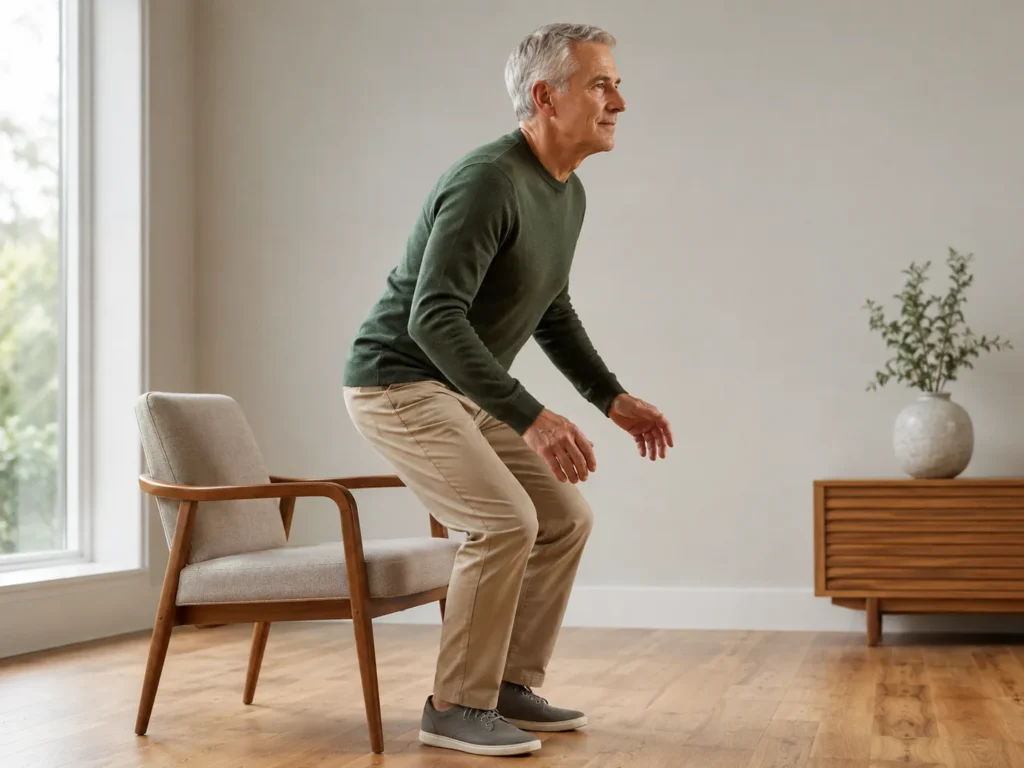
For an older adult, something as simple as practicing faster sit-to-stands, controlled step-ups, or other appropriately scaled explosive movements can target the ability to produce force quickly.
The goal is to maintain capability.
Not impress people at the gym.
Why Losing Power Can Become A Vicious Cycle

This is one of the biggest reasons I think power matters.
You lose some power.
Movement becomes harder.
You become less confident.
You move less.
You lose more strength and power.
Now movement becomes even harder.
That can eventually affect independence.
Research on older adults consistently connects lower muscle power with mobility limitations and disability, which is why researchers consider it an important part of maintaining physical function with age.
So even if power is not the sole cause of anything, maintaining it gives you a better chance of staying physically capable.
And that is the point.
So What Should You Actually Do?
Lift weights.
Build a solid strength base.
Then include some appropriately scaled power work.
For a younger, healthy person, that might mean jumps, throws, sprints, or faster resistance movements.
For an older person or someone who is not used to explosive exercise, it might mean much simpler movements performed with controlled speed.
And do not try to copy somebody else’s program.
Power training should match your current ability.
The goal is to maintain your ability to react, move, and produce force quickly for as long as possible.
The Takeaway
Most people think aging well means:
Stay active.
That is not wrong.
It is just too vague.
You want enough strength to handle load.
But you also need enough power to use that strength quickly.
Power tends to decline earlier and faster with age than strength, and it is strongly linked to the ability to remain mobile and independent.
So do not wait until you are old to think about it.
Build strength.
Then train speed on top of it.
Because when you trip, your body is not going to care how impressive your bench press was.
It cares whether you can catch yourself.
Frequently Asked Questions
What is muscle power?
Muscle power is the ability to produce force quickly. It combines force production with movement speed, which makes it different from muscle strength alone.
What is the difference between muscle strength and muscle power?
Strength is how much force you can produce. Power is how quickly you can produce that force. You can therefore have good strength while still losing some of your ability to move explosively.
Does muscle power decline with age?
Yes. Research shows that muscle power declines with age and can decline earlier and more rapidly than muscle strength.
Is muscle power linked to longevity?
Lower muscle power has been associated with higher mortality and poorer physical function in older adults. However, these are associations and do not prove that low muscle power itself directly causes earlier death.
Why is muscle power important for older adults?
Power is important for everyday movements that require you to react quickly, such as getting up from a chair, climbing stairs, recovering from a stumble, and maintaining balance.
What exercises improve muscle power?
Depending on your fitness level, power can be trained with exercises such as jumps, medicine-ball throws, short sprints, fast resistance movements, and other explosive exercises. The movement should be appropriate for your ability and performed with good control.
Should you build strength before power?
Generally, having a reasonable strength and movement foundation before adding more explosive training is a smart approach. Power training should be scaled to the person rather than treated as a one-size-fits-all workout.
Is the sitting-rising test a test of muscle power?
Not exactly. The sitting-rising test measures several physical qualities at once, including strength, power, balance, flexibility, coordination, and mobility. Poor performance has been associated with higher mortality risk, but the test should not be interpreted as a pure measure of muscle power.
The Bottom Line
Strength matters.
But strength is not the whole story.
As you age, your ability to produce force quickly becomes increasingly important for staying mobile, reacting to problems, and maintaining independence. Muscle power declines earlier and faster than strength, which is why it deserves more attention than it gets.
So train your strength.
Then train your ability to use it quickly.
That is how you stay capable for longer.
Sources / Research Notes
Key sources: longitudinal research on age-related power decline; research on lower-body power, mobility, disability and mortality; sitting-rising test literature.