
Potatoes are not the problem.
What you do with them matters a lot more.
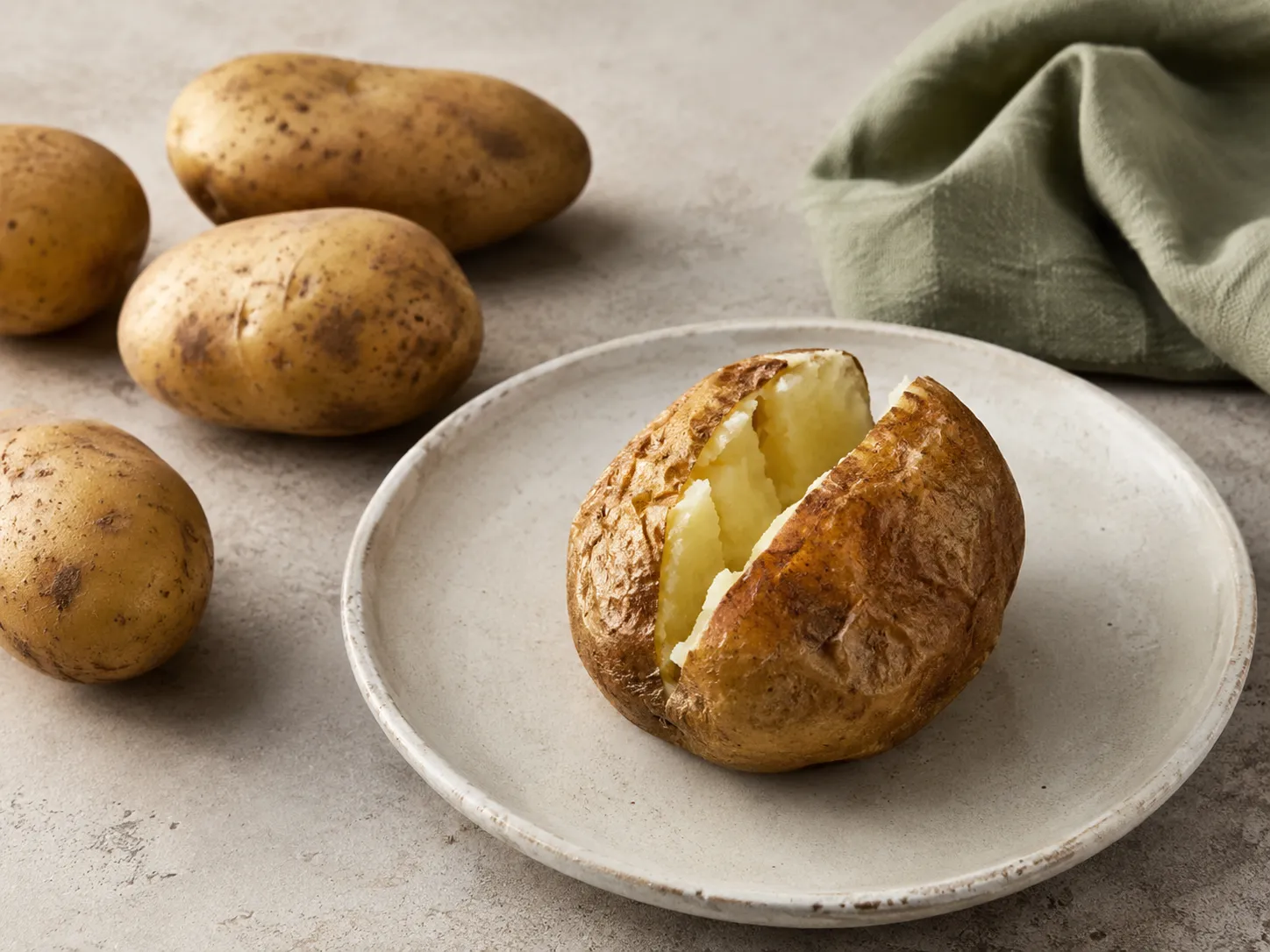
If you judge potatoes based on fries, chips, and greasy restaurant sides, you are judging the wrong food. A plain baked or boiled potato is a pretty simple food: mostly water and starch, with some fiber, potassium, vitamin C, and other nutrients.
And potatoes can actually be very filling for the calories you get.
The problem is that most people do not eat potatoes plain.
They turn them into fries.
Load them with butter and cheese.
Deep fry them.
Or eat them next to a giant burger and then blame the potato for the whole meal.
That is where things get more complicated.
Are Potatoes Good For Weight Loss?
They can be.
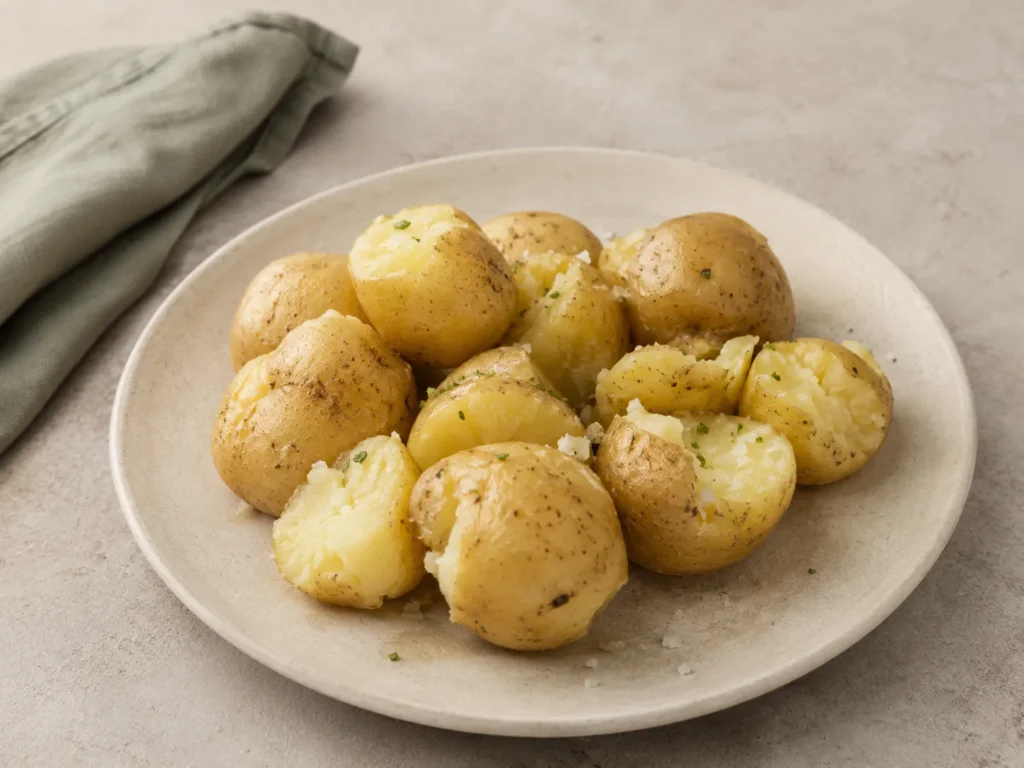
Potatoes are relatively low in calorie density because they contain a lot of water, and research has found them to be surprisingly filling compared with many other carbohydrate foods. In the classic satiety index study, boiled potatoes had the highest satiety score of the foods tested.
Other controlled studies have also found that potato-based meals can produce greater feelings of fullness than meals containing comparable amounts of rice or pasta.
That is useful if you are trying to lose weight.
You are getting a lot of food for the calories, which is exactly what you want when you are trying to eat less without feeling like you are starving.
But do not turn that into:
“Potatoes cause weight loss.”
They do not.
You are still going to lose weight because you are eating fewer calories than you are burning.
The potato just happens to be a pretty good food to use while doing that.
Potatoes And Blood Sugar Are More Complicated Than “They Are Starch”
This is where people get lazy.
They see that potatoes are high in starch and immediately assume they are terrible for blood sugar.
It is not that simple.
Potatoes can produce a fairly large blood glucose response depending on the variety, preparation method, portion size, and what else you are eating with them.
And interestingly, how you prepare them can change that response.
Cooking and then cooling potatoes increases the amount of resistant starch they contain. Resistant starch is less digestible in the small intestine and can therefore change how quickly some of the carbohydrate is handled.
In controlled studies, chilled potatoes have produced lower post-meal glucose or insulin responses than freshly cooked potatoes in some groups. But the effect is not universal.
So yes, cooling potatoes can change how your body handles them.
It is not magic.
What Happens When You Cook And Cool Potatoes?
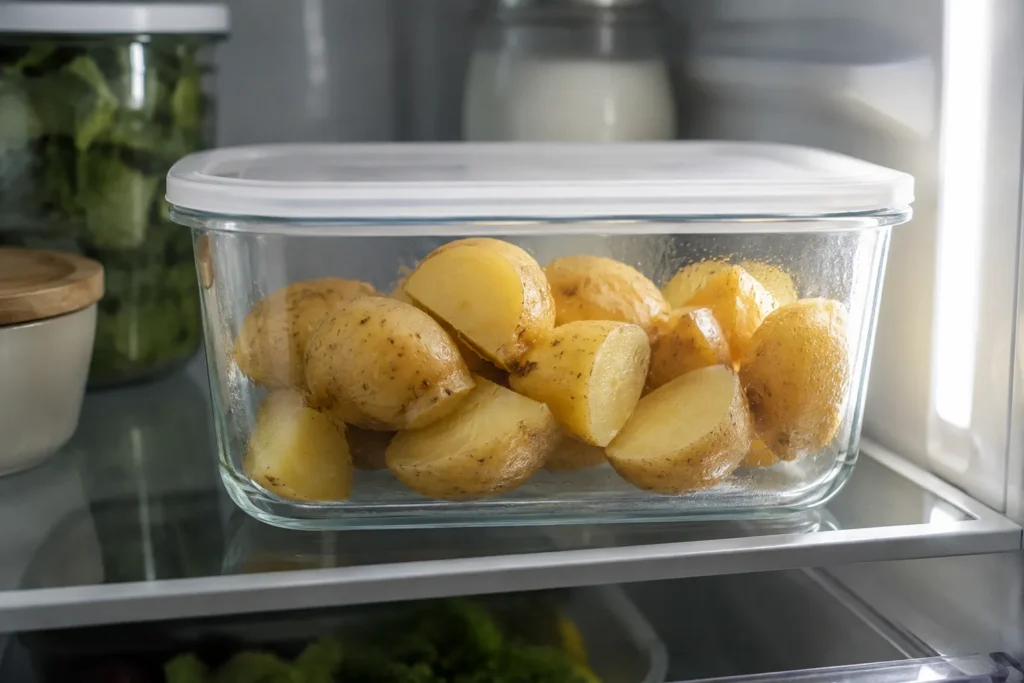
Here is the simple version.
Cook the potato -> cool it -> some of the starch becomes more resistant to digestion.
That is called retrogradation, and it increases resistant starch.
That can reduce the amount of starch that is rapidly digested and absorbed.
One controlled study found that cooling boiled potatoes increased resistant starch from about 3.3% to 5.2% of starch content.
Other research has found lower post-meal glucose or insulin responses after chilled potatoes compared with freshly cooked potatoes.
So if blood sugar control is one of your priorities, cooled potatoes can be an interesting option.
But do not get carried away.
The difference is not so massive that you need to eat every potato cold for the rest of your life.
Do Potatoes Cause Type 2 Diabetes?
This is where a recent study got a lot of attention.
A 2025 BMJ study analyzed data from 205,107 people across three large U.S. cohorts and also included a meta-analysis of 13 prospective cohorts.
Higher total potato intake was associated with a higher risk of type 2 diabetes.
But here is the important part:
The association was primarily driven by French fries.
The researchers found that baked, boiled, or mashed potatoes were not significantly associated with higher type 2 diabetes risk after adjustment for other factors.
That is a very different story from:
“Potatoes cause diabetes.”
They do not.
The way you eat them and what they are replacing matters.
Fries Are A Different Food
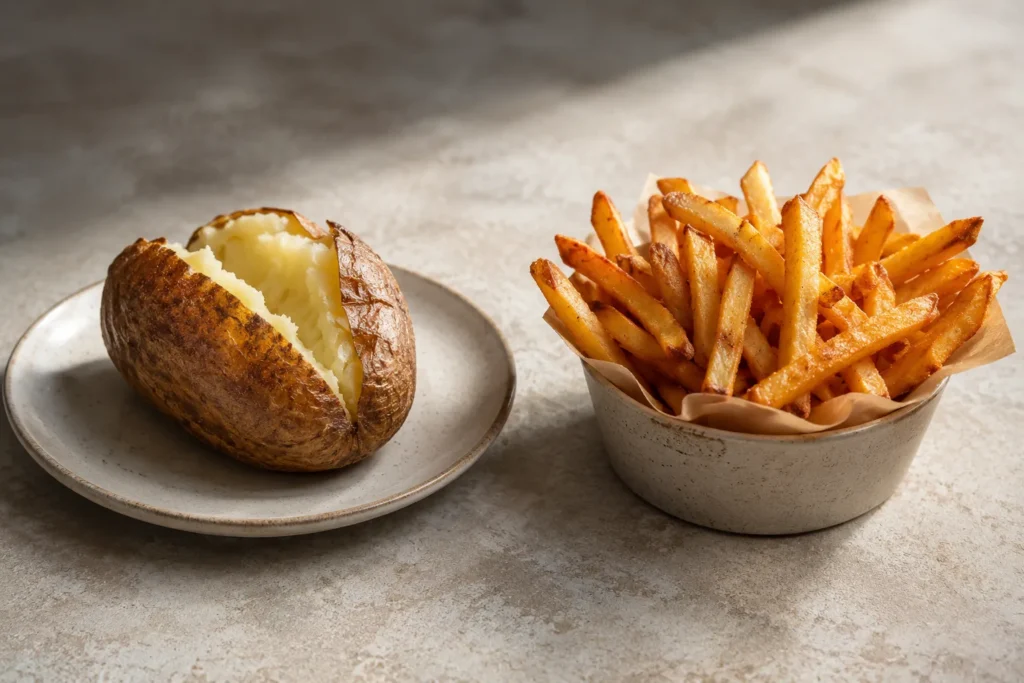
This should be obvious.
Somehow it is not.
A plain baked potato and a bucket of French fries both came from the same plant.
That does not make them nutritionally equivalent.
French fries are usually cooked in a lot of oil, which dramatically increases their calorie density. They are also extremely easy to overeat.
And in that 2025 BMJ study, eating more French fries was associated with a substantially higher risk of developing type 2 diabetes, while baked, boiled, and mashed potatoes were not.
The researchers estimated that every additional three weekly servings of French fries was associated with about a 20% higher rate of type 2 diabetes.
That is not a reason to panic over French fries.
It is a reason to stop pretending that a deep-fried potato is the same food as a boiled potato.
What About Potato Chips?
Same general idea.
A potato chip is not just a potato.
It is a potato plus a bunch of added fat, salt, and a preparation method that makes it extremely easy to eat a lot of calories without feeling particularly full.
That is a bad combination if weight loss is the goal.
Again, the issue is not that the potato suddenly became toxic.
It is what happened to the potato.
White Potatoes vs. Sweet Potatoes
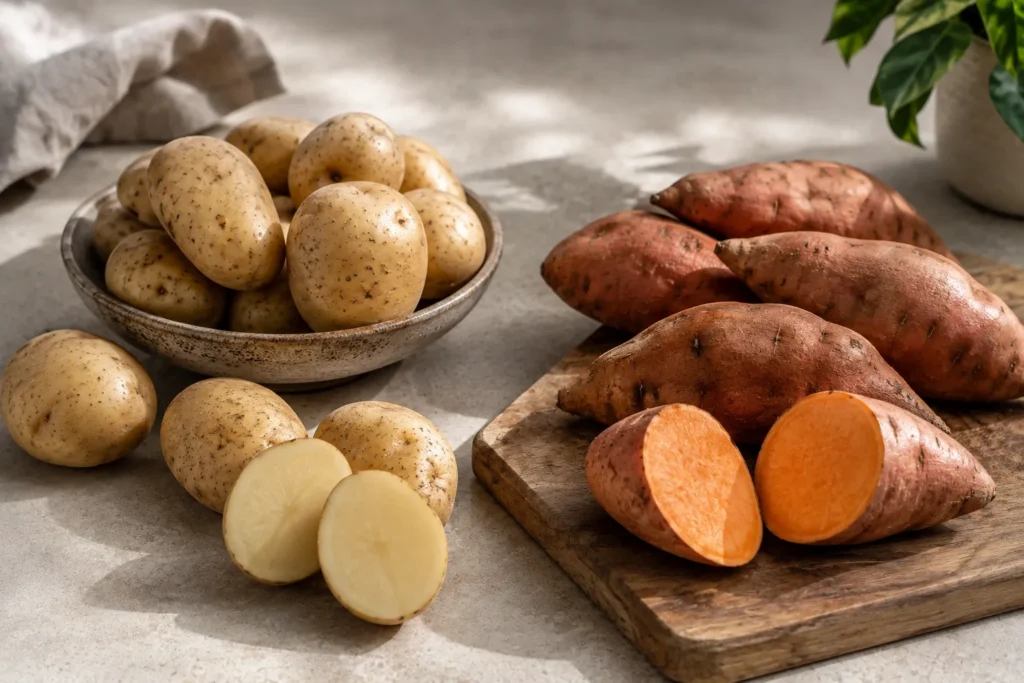
People love trying to find the one potato that is “best.”
Stop doing that.
They are different foods with somewhat different nutritional profiles.
Sweet potatoes generally provide more fiber and substantially more beta-carotene, which your body can convert to vitamin A. White potatoes are also nutritious and are particularly rich in potassium and vitamin C. The exact numbers depend on the variety and serving size.
So which one should you eat?
It depends on what you want.
If you are trying to maximize certain micronutrients, sweet potatoes have some advantages.
If you want a filling, relatively low-calorie carbohydrate source, regular potatoes work extremely well.
You do not need to pick a side.
Can Potatoes Actually Keep You Full?
Yes.
This is probably one of the most underrated things about potatoes.
The reason is not some magical potato hormone.
It is basically the combination of water, food volume, and relatively low energy density.
That means you can eat a fairly large portion for a reasonable number of calories.
And research backs up the idea that potatoes can be highly satiating. In one classic study, boiled potatoes produced the highest satiety score among the foods tested.
Other controlled research has found that potato-containing meals can leave people feeling fuller than comparable rice or pasta meals.
That is useful for weight loss.
Because when you are dieting, one of the biggest problems is simply being hungry all the time.
A food that gives you a lot of volume for relatively few calories can make that easier.
The 5 most toxic items in your bathroom, kitchen, and bedroom.
Find out which to fix first, free.
Instant access. No account needed.
Does The Glycemic Index Make Potatoes Bad?
Not automatically.
This is another place where people see one number and act like they have solved nutrition.
Potatoes can have a relatively high glycemic index depending on how they are prepared.
But GI does not tell you the whole story.
Portion size matters.
The total amount of carbohydrate matters.
What you eat with the potato matters.
And the research on potatoes shows that glycemic response does not perfectly predict how full people feel or how much they eat afterward.
So do not look at the GI number and decide potatoes are automatically off-limits.
What About Eating Cold Potatoes For Weight Loss?
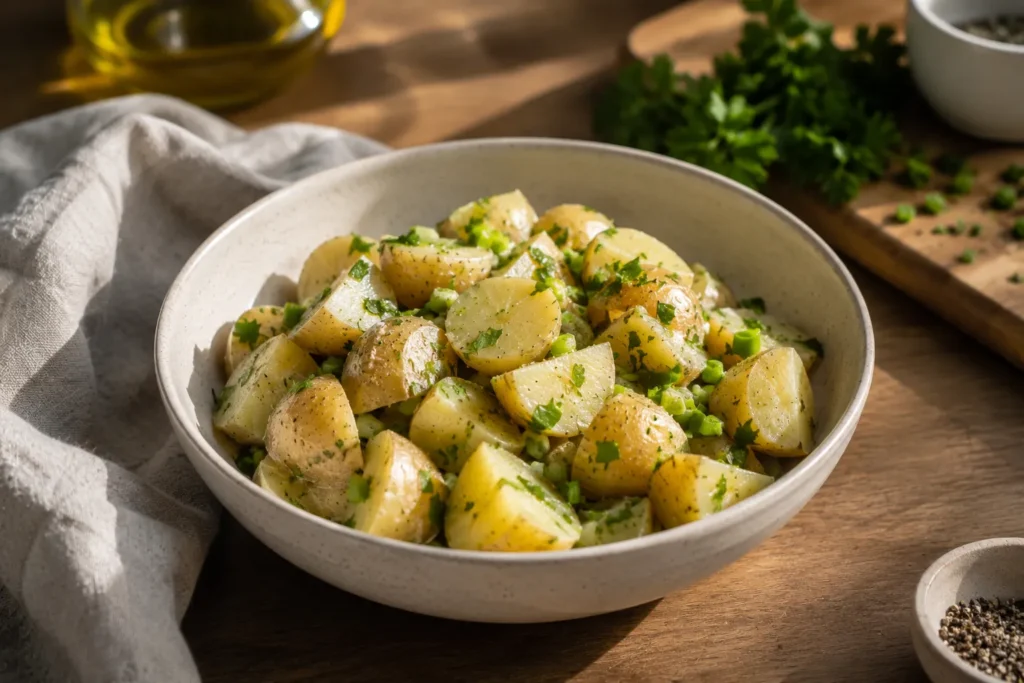
This is one of the more interesting tricks.
Cooling potatoes increases resistant starch, which can change digestion and the post-meal glucose response.
But here is what I would actually do:
If you like cold potato salad, great.
If you prefer your potatoes hot, eat them hot.
You do not need to force yourself to eat cold potatoes because somebody on TikTok told you it “activates fat burning.”
It does not.
The biggest factor in weight loss is still your total calorie intake.
The resistant starch thing is a small optimization, not the foundation of your diet.
Are Potatoes Easy On Your Stomach?
This is one claim I would be careful with.
A plain potato can certainly be an easy food for some people to tolerate, especially when it is simply boiled or baked.
But that does not mean potatoes are universally good for reflux, gastritis, or digestive problems.
People respond differently.
And there is not good evidence that the starch in potatoes is somehow coating or protecting your stomach from acid in the way some health articles claim.
So if plain potatoes feel good to your stomach, great.
Eat them.
Just do not turn that personal observation into a medical claim.
What About Sprouted Potatoes?
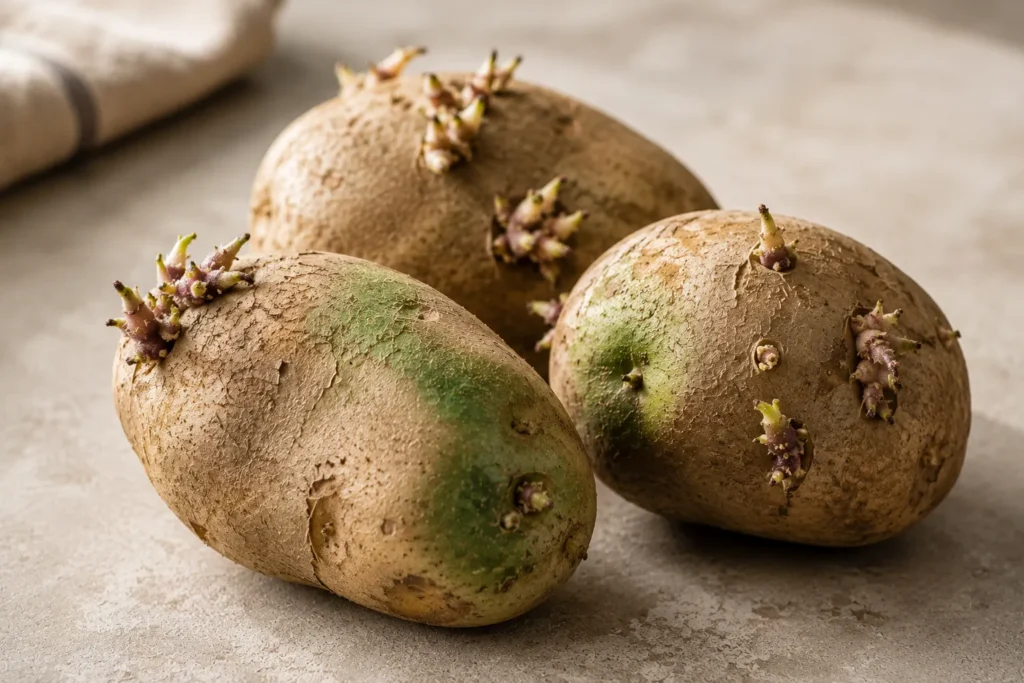
This one actually deserves some attention.
Potatoes naturally contain glycoalkaloids, including solanine and chaconine. These compounds are present at higher concentrations in parts of the plant such as sprouts, eyes, and green skin.
As potatoes sprout, glycoalkaloid concentrations can increase.
And here is the annoying part:
Cooking does not reliably eliminate these compounds.
So do not assume you can just cook a heavily sprouted or green potato and make the problem disappear.
The safest approach is to buy potatoes as you need them and store them somewhere cool, dry, and away from light.
If a potato is heavily sprouted, badly green, or bitter, I would just throw it away.
Potatoes are cheap.
There is no reason to gamble over a $1 potato.
What Is The Best Way To Eat Potatoes For Weight Loss?
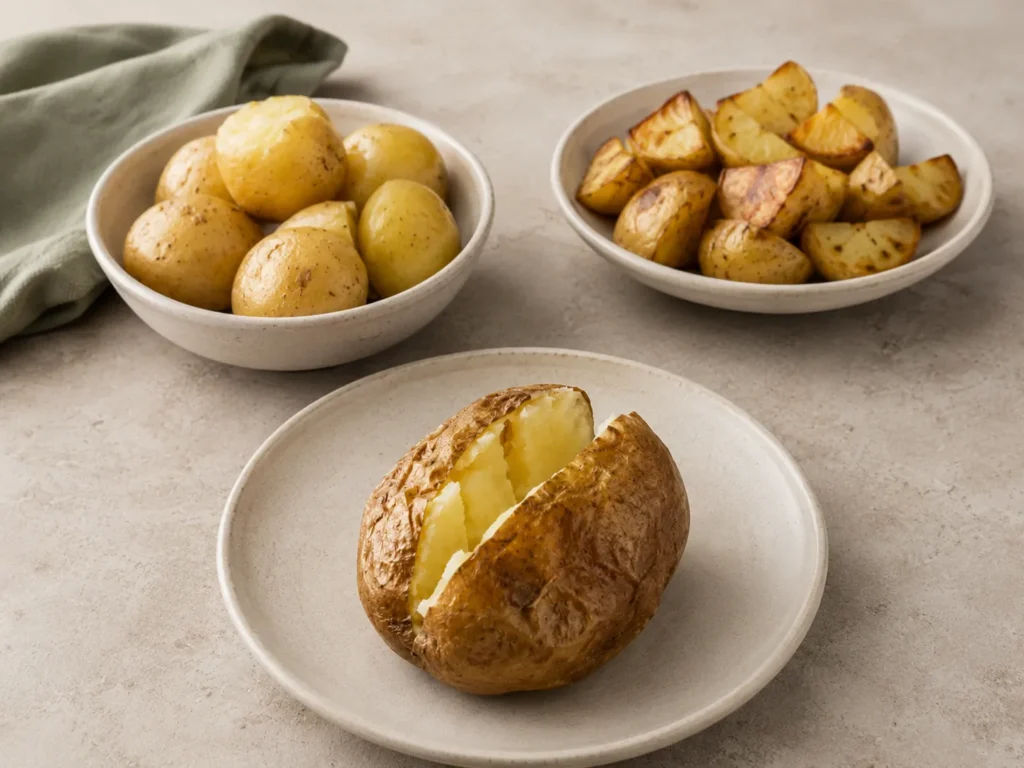
Which ever way you prefer.
Bake them.
Boil them.
Roast them with a reasonable amount of oil.
Steam them.
Keep the added fats under control.
Because here is what happens:
A plain potato can be pretty filling for relatively few calories.
Then somebody adds half a stick of butter, cheese, sour cream, bacon, and another 400 calories of whatever else they found in the refrigerator.
And suddenly the potato is taking the blame.
That is not the potato’s fault.
What Actually Matters More Than the Potato?
Your entire diet.
The 2025 BMJ study is actually a good example of why you need to think about the replacement food, not just one ingredient. Replacing potatoes with whole grains was associated with lower type 2 diabetes risk, while replacing potatoes with white rice did not produce the same result.
So the real question is not:
“Are potatoes healthy?”
It is:
“What am I eating instead?”
If you are replacing French fries with potatoes you bake at home, that is obviously a different meal.
If you are replacing potatoes with a giant pile of refined carbs, that is another situation.
Food does not exist in a vacuum.
The Takeaway
Potatoes are not inherently bad for weight loss.
They are actually a pretty useful food because they are filling, relatively low in calorie density, and provide plenty of nutrients for the calories.
Cooking method matters.
Portion size matters.
What you put on them matters.
And if you cool cooked potatoes, the resistant starch content increases, which can change the post-meal glucose response.
The biggest mistake is putting potatoes, French fries, and potato chips into the exact same category.
They are not the same food anymore.
So eat the potato.
Just do not deep fry it and then blame the potato.
Frequently Asked Questions
Are potatoes good for weight loss?
They can be. Potatoes are relatively low in calorie density and can be highly satiating, which can make them useful in a calorie-controlled diet.
Do potatoes raise blood sugar?
They can. Potatoes contain a significant amount of starch, and some varieties and preparations can produce a substantial blood glucose response. However, preparation method, portion size, and the rest of the meal all matter.
Are potatoes bad for type 2 diabetes?
Not automatically. A 2025 BMJ study found that the association between potatoes and higher type 2 diabetes risk was primarily driven by French fries, while baked, boiled, and mashed potatoes were not significantly associated with increased risk after adjustment.
Does cooling potatoes reduce their effect on blood sugar?
Cooling cooked potatoes increases resistant starch and can reduce some post-meal glucose or insulin responses in controlled studies. However, the effect varies and is not large enough to make cold potatoes a requirement for a healthy diet.
Are sweet potatoes healthier than white potatoes?
Not automatically. They have different nutritional strengths. Sweet potatoes generally provide more beta-carotene and fiber, while white potatoes are good sources of potassium and vitamin C. Both can fit into a healthy diet.
Are boiled potatoes good for weight loss?
They can be an excellent option. Boiled potatoes have scored very highly for satiety in controlled research, meaning they can help you feel full for relatively few calories.
Are French fries bad for you?
French fries are much more calorie-dense than plain potatoes because of the added cooking fat, and higher French fry intake was associated with greater type 2 diabetes risk in a large 2025 BMJ study.
Can you eat potatoes every day?
Yes, potatoes can be part of a healthy diet. The bigger questions are how they are prepared, how much you are eating, what else is in the meal, and whether your overall diet is balanced.
Should you eat potatoes cold for weight loss?
You do not have to. Cooling potatoes increases resistant starch and may improve the post-meal glucose response, but the effect is a small optimization. Your overall calorie intake and diet matter much more for weight loss.
Are sprouted potatoes safe to eat?
Heavily sprouted, green, or bitter potatoes are best discarded because glycoalkaloid concentrations can increase in those parts of the potato. Cooking does not reliably eliminate these compounds.
Sources
Key sources: 2025 BMJ study on potato intake and type 2 diabetes; classic satiety research; controlled studies on potato preparation, resistant starch, and glycemic response; Poison Control guidance on green/sprouted potatoes.