
Constipation is not always a fiber problem.
Sometimes your diet is missing something else.
One vitamin that does not get nearly enough attention when people talk about digestion is thiamine, or vitamin B1.
Thiamine helps your body turn food into usable energy, and your digestive system needs energy too. Your intestines have to contract, your nerves have to communicate, and your gut has to keep constantly maintaining itself.
So researchers have started looking at whether vitamin B1 intake has anything to do with bowel movements.
And there is actually some interesting evidence.
Can Vitamin B1 Help With Constipation?
Possibly.
A 2024 population-based study looked at dietary vitamin B1 intake and chronic constipation and found that people consuming more thiamine had lower odds of constipation. The association remained after researchers adjusted for several other dietary and health factors.
That is interesting.
But here is the part you need to understand:
The study found an association. It did not prove that taking more vitamin B1 will cure constipation.
That is an important distinction.
Still, there is a biologically plausible reason researchers are interested in the connection.
What Does Vitamin B1 Actually Do?
Vitamin B1 is one of the vitamins your body uses to convert carbohydrates and other nutrients into energy.
And your gut is constantly using energy.
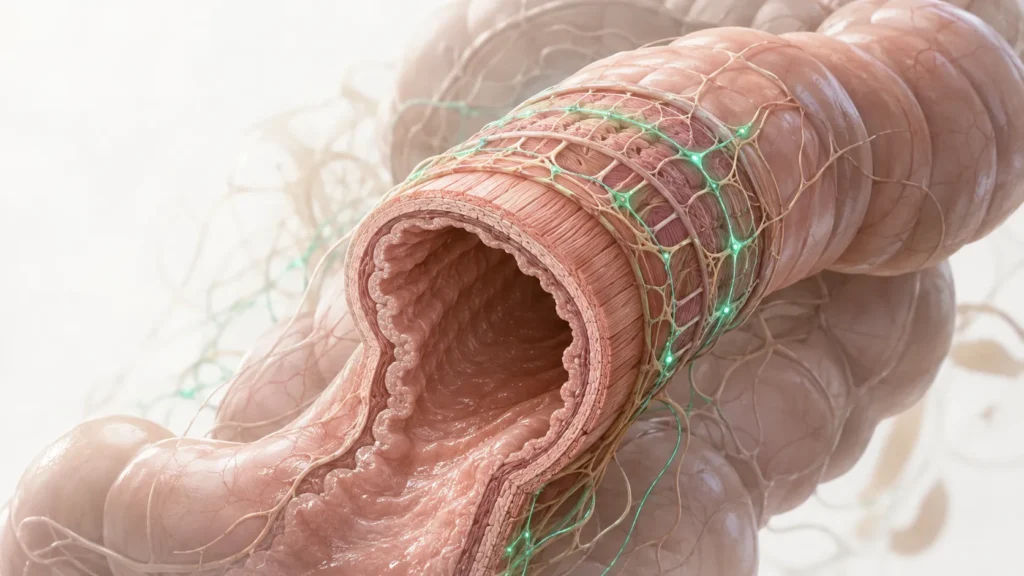
Your intestines have muscles that have to contract to move food and waste along. Your enteric nervous system has to coordinate those contractions. Your intestinal cells also need energy to maintain and repair themselves.
So your digestive system is not just a hollow tube waiting for fiber to show up.
It is active tissue.
It is moving.
It is signaling.
It is working all day.
And thiamine is involved in the metabolism that helps those cells do their jobs.
How Could Thiamine Affect Bowel Movements?
There are a few possible explanations.
Thiamine is involved in cellular energy metabolism, and researchers have also proposed a role for it in acetylcholine signaling, which is important for the nervous system and gastrointestinal motility. A 2025 review specifically discussed thiamine’s potential relationship with intestinal motility, constipation, gut-barrier function, and enteric nervous-system signaling.
That gives the constipation connection a plausible mechanism.
Basically:
Your gut needs energy and nerve signaling to move properly.
Thiamine is involved in both of those systems.
But again, plausible mechanism does not equal proven treatment.
The Human Evidence Is Actually Pretty Interesting

The 2024 study is worth paying attention to because it was not just a tiny experiment.
Researchers analyzed dietary data from 10,000+ adults and found that higher vitamin B1 intake was associated with a lower prevalence of constipation. They also reported relationships involving stool consistency and colonic peristalsis.
After adjusting for things such as fiber, other B vitamins, and total energy intake, the association remained.
That is useful because it makes the finding harder to explain simply by saying:
“People who eat more B1 just eat healthier overall.”
But it still does not eliminate every possible confounding factor.
And the researchers themselves said more prospective research is needed.
So I would call this:
A real signal worth investigating.
Not:
A proven constipation treatment.
This Does Not Mean Constipation Is a Vitamin B1 Deficiency
This is important.
Most people with constipation are not automatically deficient in thiamine.
The NIH says thiamine deficiency is rare in the United States, although some groups are at higher risk, including people with alcohol dependence, older adults, people with diabetes, and people who have undergone bariatric surgery.
So if you are constipated, do not immediately assume:
“I am deficient in vitamin B1.”
There are a lot of reasons people become constipated.
Not enough fiber.
Not enough fluid.
Low physical activity.
Certain medications.
Changes in routine.
Irritable bowel syndrome.
Pelvic-floor problems.
Slow intestinal transit.
And plenty of other causes.
Thiamine could be one piece of the puzzle.
It is not the entire puzzle.
Who Is More Likely to Have Low Thiamine?
This is where the vitamin B1 connection becomes more relevant.
According to the NIH, groups at increased risk of thiamine inadequacy include people with alcohol dependence, older adults, diabetes, and people who have had bariatric surgery. Problems with absorption and low food intake can also increase risk.
Severe thiamine deficiency can cause much bigger problems than constipation, including weakness, neurological problems, confusion, and cardiovascular complications.
So this is not some harmless little vitamin that only matters if you are having trouble going to the bathroom.
It is an essential nutrient.
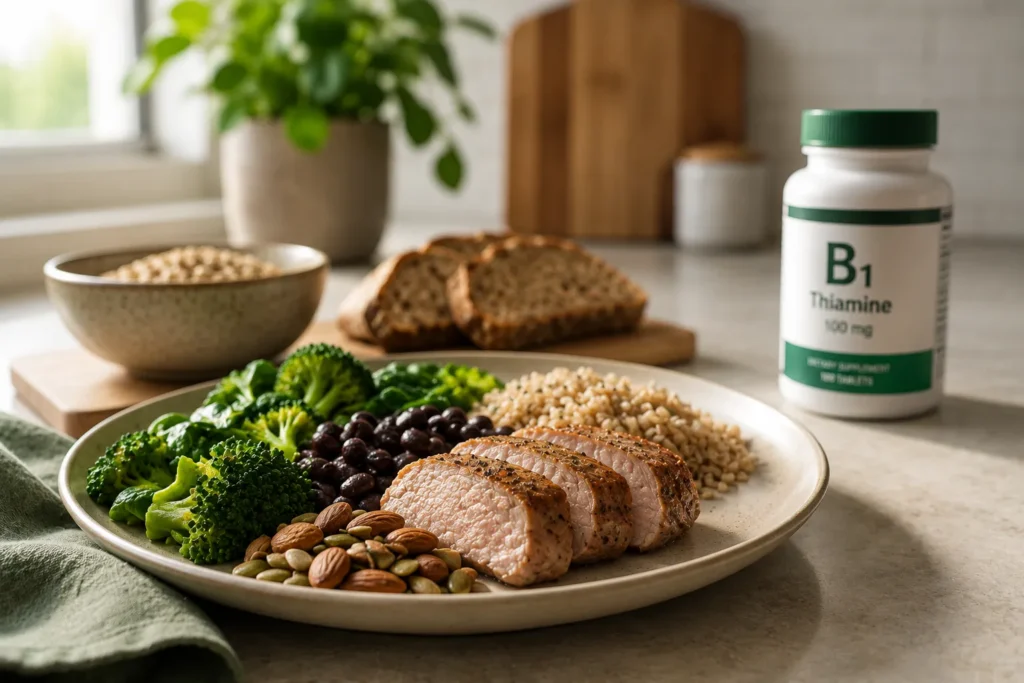
Where Do You Get Vitamin B1?
You do not necessarily need a supplement.
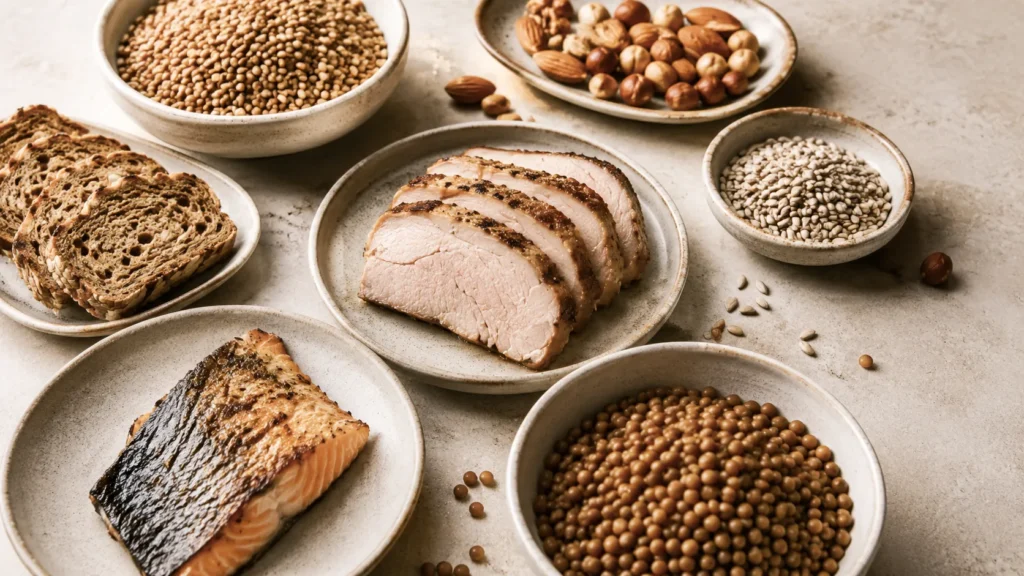
Thiamine is found in a lot of normal foods.
Good sources include:
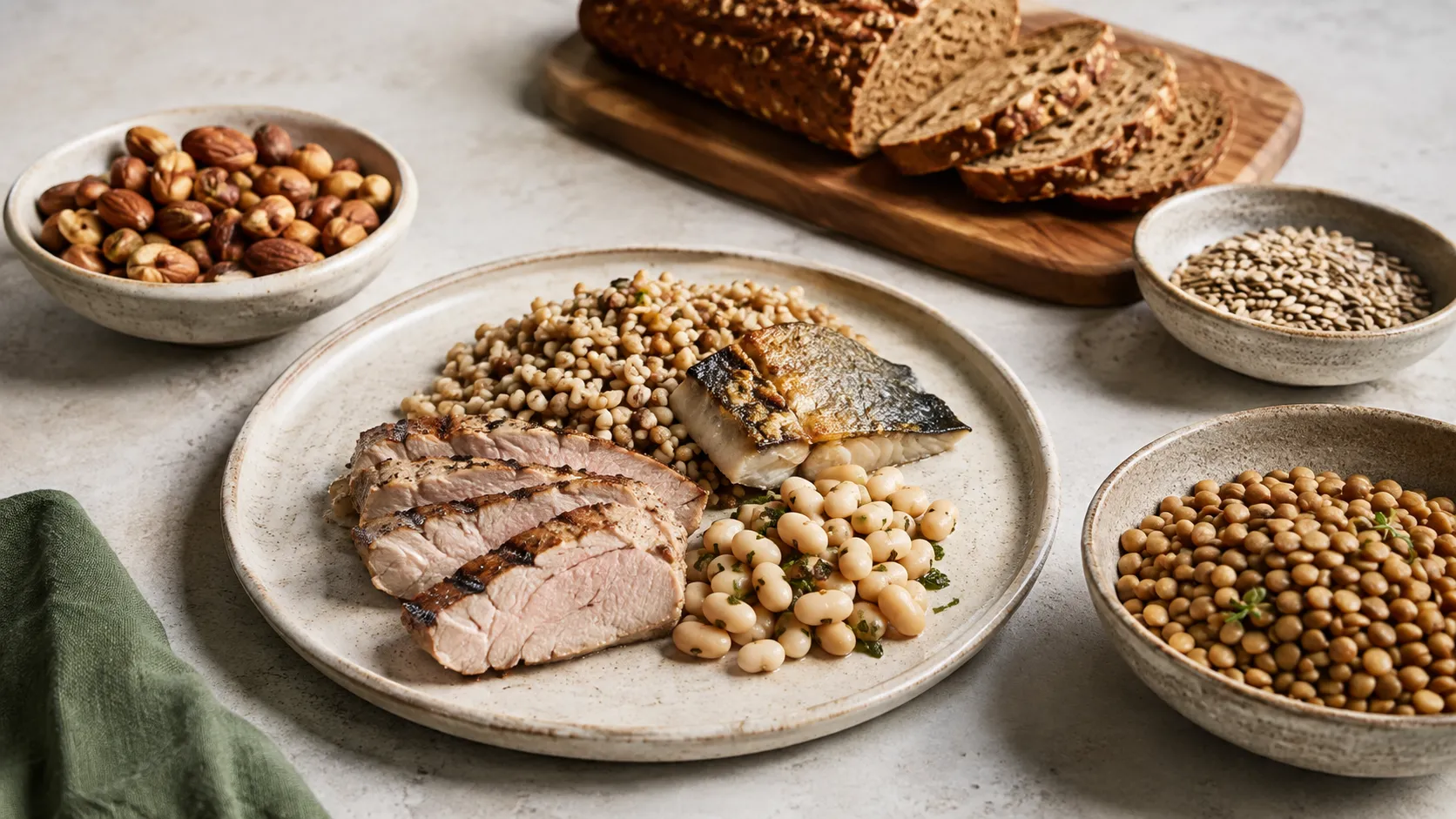
Pork
Whole grains
Fortified breads and cereals
Beans and other legumes
Nuts and seeds
Fish
The recommended daily amount for adults is about 1.2 mg per day for men and 1.1 mg for women.
That is not much.
And most people in the United States get enough from food.
Which is another reason I would not jump straight to a supplement.
Fix the diet first.
What About the Gut Microbiome?

Here is where the science gets really interesting.
Your gut bacteria interact with thiamine too.
Some bacteria can make thiamine, while other bacteria require it from their environment. Research has shown that certain human gut bacteria involved in butyrate production depend on thiamine and that microbes can exchange vitamins with each other.
There is also recent human research suggesting that thiamine availability may influence microbial production of short-chain fatty acids such as butyrate.
But do not take that and conclude:
“Take B1 and your gut microbiome will be fixed.”
That is not established.
The microbiome is complicated as hell.
What About Butyrate?
Butyrate is a short-chain fatty acid produced by certain gut bacteria.
It is important because it can serve as an energy source for colon cells and is involved in maintaining the intestinal environment. Research has also linked short-chain fatty acids with intestinal transit and gut-barrier function.
That makes the relationship between diet, thiamine, gut bacteria, and digestion pretty interesting.
But again, do not make the mistake of taking one piece of the pathway and turning it into a guaranteed treatment.
We do not know enough to say that increasing vitamin B1 alone will reliably increase butyrate and fix constipation.
Should You Take a Vitamin B1 Supplement?
Maybe.
Not automatically.
If you are eating a varied diet, you are probably already getting enough thiamine. The NIH says most people in the United States get sufficient thiamine through food and that deficiency is uncommon.
So if you are constipated, I would not immediately go buy a giant bottle of B-complex vitamins.
Look at the basics first.
Are you eating enough fiber?
Are you drinking enough?
Are you eating mostly whole foods?
Are medications or other conditions potentially contributing?
If those things are already under control and you have risk factors for thiamine deficiency, that is when it makes more sense to talk to a healthcare professional about whether nutritional deficiencies should be evaluated.
Guessing is dumb.

The 5 most toxic items in your bathroom, kitchen, and bedroom.
Find out which to fix first, free.
Instant access. No account needed.
How Much Vitamin B1 Do You Need?
For adults, the recommended daily amount is:
Men: 1.2 mg/day
Women: 1.1 mg/day
During pregnancy and breastfeeding, the recommendation is higher.
The good news is that thiamine is found in a lot of ordinary foods.
Pork.
Beans.
Whole grains.
Seeds.
Nuts.
So you do not need some exotic superfood.
The Bigger Point About Constipation

This is actually the part I care about most.
People tend to treat constipation like it has one cause.
“You need more fiber.”
Maybe.
But your digestive system is a biological machine with muscles, nerves, hormones, microbes, and cells all interacting with each other.
So it is not crazy that nutrition could affect more than just the amount of stuff sitting in your colon.
The thiamine research is one example of that.
It does not prove that B1 deficiency is the reason you are constipated.
It does show that vitamin B1 intake and bowel function are connected enough to deserve more research.
The Takeaway
Vitamin B1 might matter for constipation more than most people realize.
A 2024 population study found that higher dietary thiamine intake was associated with a lower likelihood of chronic constipation, and researchers have plausible reasons to think thiamine could influence gut motility and intestinal nerve signaling.
But that does not mean everyone with constipation needs a B1 supplement.
Most people get enough.
So eat the foods that contain it.
Get your basics right.
And if constipation is persistent or unexplained, do not just keep throwing supplements at it.
Figure out what is actually causing it.
Frequently Asked Questions
Can vitamin B1 help constipation?
Possibly. A 2024 population-based study found that higher dietary thiamine intake was associated with lower odds of chronic constipation. However, the study was observational and did not prove that vitamin B1 supplementation treats constipation.
Does thiamine deficiency cause constipation?
Thiamine deficiency can affect gastrointestinal function and has been linked to impaired motility, but constipation has many possible causes and is not automatically a sign of vitamin B1 deficiency.
How much vitamin B1 do you need per day?
The recommended daily amount is 1.2 mg for adult men and 1.1 mg for adult women.
What foods are high in vitamin B1?
Good sources include pork, whole grains, fortified cereals and breads, legumes, nuts, seeds, and fish.
Who is at risk of vitamin B1 deficiency?
People with alcohol dependence, older adults, people with diabetes, and people who have undergone bariatric surgery are among the groups at higher risk of thiamine inadequacy. Problems with absorption and low food intake can also increase risk.
Should I take vitamin B1 for constipation?
Not automatically. Most people get enough thiamine from food, and there is not enough evidence to recommend B1 supplementation as a general constipation treatment.
Does vitamin B1 affect gut bacteria?
Thiamine is relevant to gut microbial metabolism, and some gut bacteria require or produce thiamine. Research is still investigating how thiamine availability interacts with the microbiome and compounds such as butyrate.
Can constipation be caused by something other than low fiber?
Absolutely. Constipation can have many causes, including low physical activity, medications, changes in routine, gastrointestinal disorders, pelvic-floor dysfunction, and slow intestinal transit. Low fiber is only one possible factor.
Sources / Research Notes
Key sources: NIH Office of Dietary Supplements Thiamin Fact Sheet; 2024 population-based study of dietary vitamin B1 and constipation; 2025 review of thiamine and gastrointestinal motility; research on thiamine and gut microbial metabolism.