
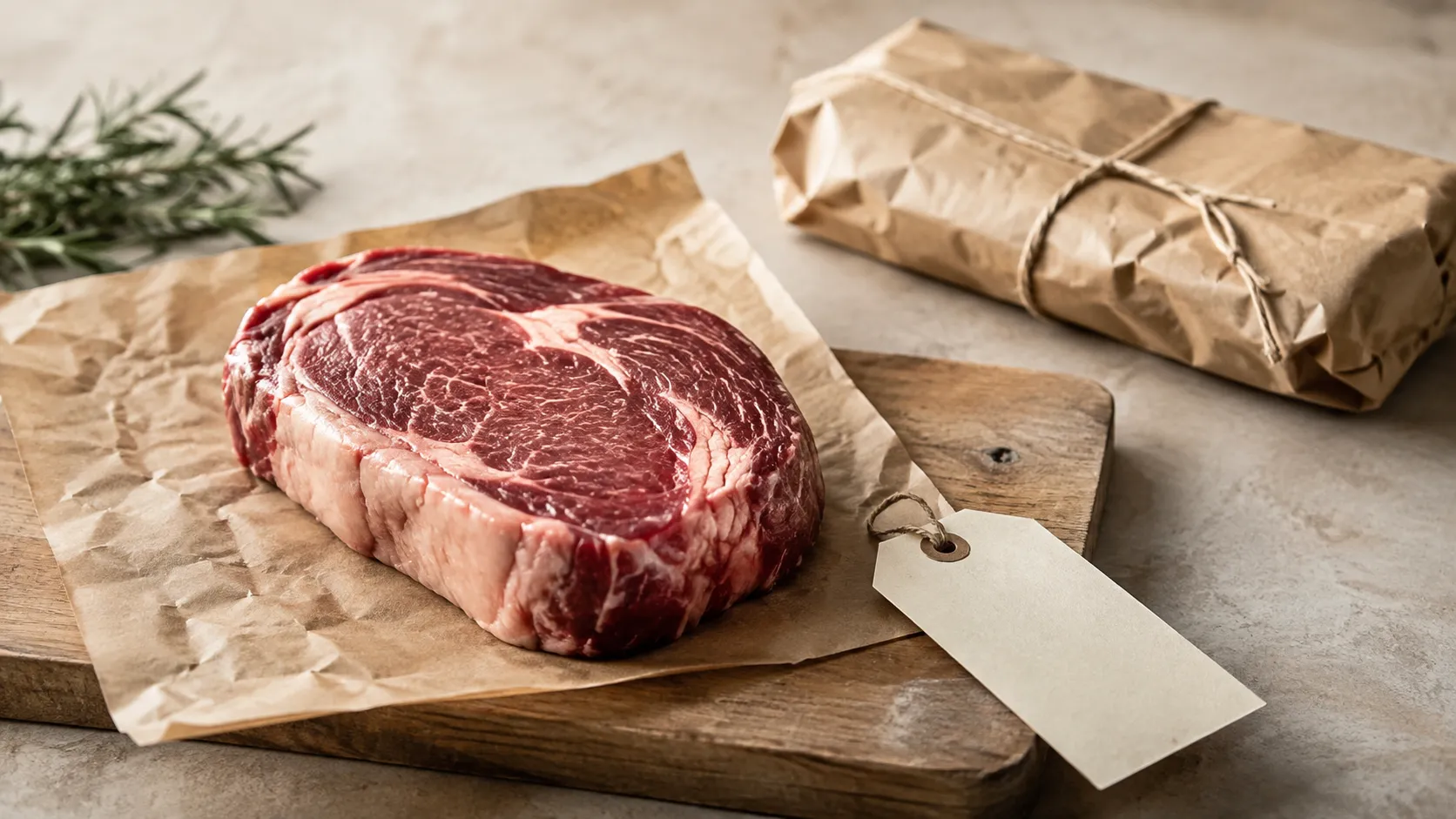
I used to stand in the meat aisle, look at the price difference, and grab the cheaper one.
Grass-fed beef costs more. Conventional beef costs less. And when you are buying beef every week, that difference adds up.
So I wanted to know something pretty simple:
Is grass-fed beef actually worth paying more for?
After looking into it, I think the answer is:
It can be.
There are real nutritional differences between grass-fed and grain-finished beef.
But there are also a lot of bullshit claims about grass-fed beef that go way beyond what the research actually says.
Is Grass-Fed Beef Actually Healthier?
In some ways, yes.
Grass-fed or grass-finished beef generally has a different fatty-acid profile than grain-finished beef, including higher levels of some omega-3 fatty acids and CLA. Some studies also find higher concentrations of vitamin E and other antioxidant compounds.
A 2026 study of more than 300 commercial North American beef samples found that grass-fed beef had more ALA, EPA, DPA, and CLA, along with higher concentrations of several minerals. It also had a much lower average omega-6:omega-3 ratio than grain-fed beef.
So yes, the nutritional difference is real.
But grass-fed beef is not magic.
It is not.
Grass-Fed vs. Grass-Finished vs. Organic
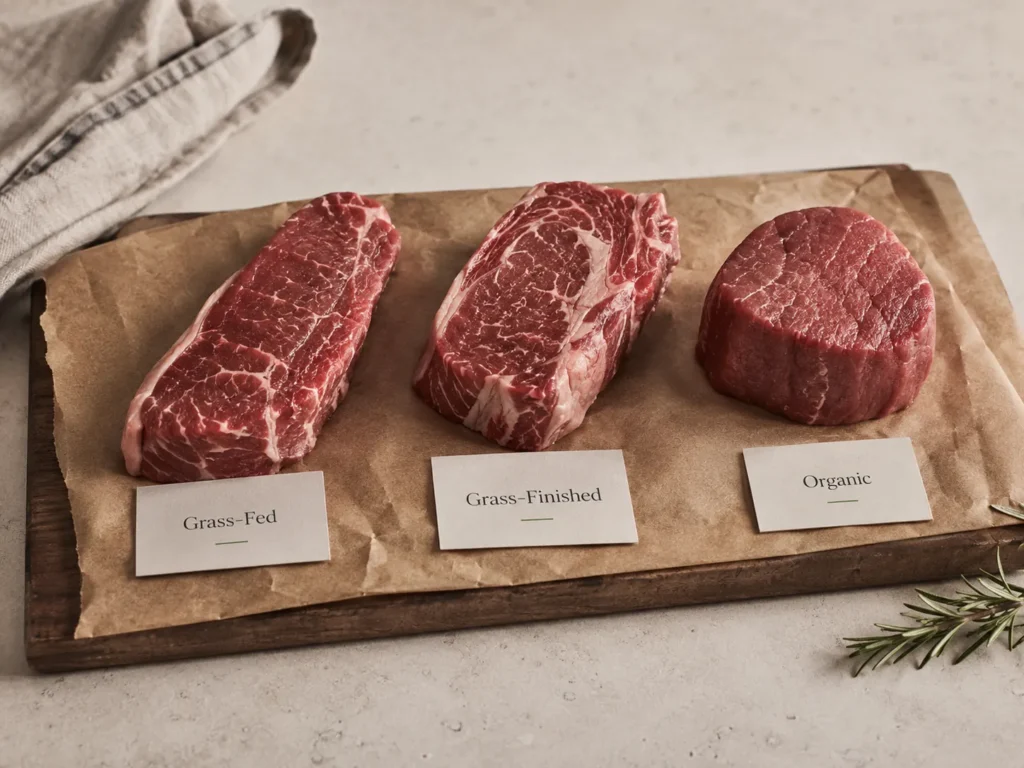
This gets confused constantly.
Grass-fed refers to the animal’s diet, but you need to pay attention to exactly what the producer means by the label.
Grass-finished generally means the animal remained on forage through the finishing stage rather than being finished on a grain-heavy diet.
Organic is something completely different.
Organic beef has to meet USDA requirements involving feed, pasture, livestock management, and prohibited substances. Organic ruminants must receive organic feed and have access to pasture during the grazing season, with specific minimum pasture requirements.
So you can have:
Grass-fed but not organic.
Organic but not exclusively grass-finished.
Both.
Those are not the same thing.
Does Grass-Fed Beef Have More Omega-3?
Yes.
This is one of the better-established nutritional differences.
Grass-based feeding generally results in beef with more omega-3 fatty acids than grain finishing.
The recent 2026 commercial beef study found that grass-fed samples had significantly higher levels of ALA, EPA, and DPA than grain-fed samples. The average omega-6:omega-3 ratio was 2.14 in grass-fed beef versus 8.28 in grain-fed beef.
That is a pretty significant difference.
But here is the part people leave out:
There was a lot of variation.
Grass-fed samples had omega-6:omega-3 ratios ranging from 0.62 to 11.45. Some grass-fed retail samples had nutritional profiles that looked much more like the grain-fed samples.
So do not assume every package with a grass-fed label has some perfect nutritional profile.
The label tells you something.
It does not tell you everything.
What About the Omega-6 to Omega-3 Ratio?
You have probably heard people say that your diet needs to have some perfect omega-6 to omega-3 ratio.
That is oversimplified.
There is not one magic ratio that your body is sitting around waiting for you to hit. But the fact that grass-fed beef has a different fatty-acid profile is still worth knowing.
In the 2026 study, grass-fed beef had a significantly lower omega-6:omega-3 ratio than grain-fed beef.
That is one reason I would rather buy grass-fed or grass-finished if the price difference is not ridiculous.
Just do not pretend this one food is going to fix your entire diet.

The 5 most toxic items in your bathroom, kitchen, and bedroom.
Find out which to fix first, free.
Instant access. No account needed.
What About CLA?
CLA stands for conjugated linoleic acid.
Grass-fed beef generally contains more CLA than grain-finished beef.
CLA has been studied for possible effects on body composition, glucose metabolism, inflammation, and cancer.
Sounds pretty good.
But this is another place where people get ahead of themselves.
Just because a compound has interesting biological effects does not mean eating more of it in beef will prevent cancer or cause you to lose body fat.
That is not how evidence works.
So yes, more CLA is interesting.
No, I am not going to tell you grass-fed beef is an anti-cancer food.
Does Grass-Fed Beef Have More Vitamins and Antioxidants?
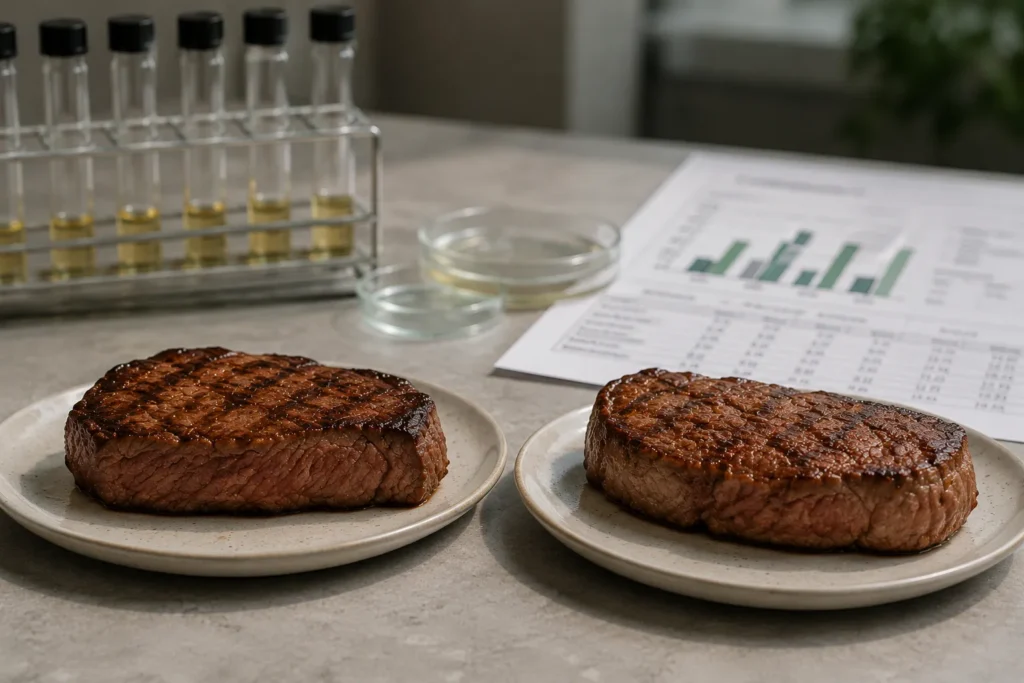
There is evidence that it can.
Research has found higher levels of certain antioxidant compounds and vitamin E in grass- and pasture-finished beef compared with grain-finished beef. One recent study found substantially higher concentrations of several nutrients and antioxidant compounds in its grass-fed samples.
That is a legitimate difference in the meat.
But again, there is an important distinction:
More of a nutrient in a food does not automatically mean a proportional increase in your health.
That is a mistake people make constantly.
You cannot look at a food with twice as much of one nutrient and conclude that eating it will make you twice as healthy.
The human body is not a spreadsheet.
What About Antibiotics?
This is where organic matters more than grass-fed.
USDA organic production does not allow antibiotics as part of organic livestock production. Conventional cattle, meanwhile, can be treated with antibiotics when medically necessary under regulated conditions.
That is an important distinction.
But do not take that to mean:
“Conventional beef is full of antibiotics.”
That is not true.
There are rules around antibiotic use, withdrawal periods, and residues in meat.
There is also research showing differences in antibiotic-resistant organism contamination between some organic and conventional retail meat. One large study analyzed nearly 40,000 meat samples and found lower multidrug-resistant organism contamination in organically produced meat processed at facilities that also handled conventional products.
That is interesting.
But it does not prove that eating conventional beef causes antibiotic resistance in you.
Those are two different questions.
What About Hormones?
This gets exaggerated too.
FDA-approved hormone implants can legally be used in beef cattle to improve growth and feed efficiency.
Organic production prohibits growth-promoting hormones.
So there is a real difference in production practices.
But I would not tell you that eating a conventional steak is automatically going to “mess up your hormones.”
That is a much bigger claim than the evidence supports.
If you personally want to avoid growth-promoting hormone use, buying organic or a product with an appropriate verified claim is a reasonable choice.
Just do not turn that preference into “conventional beef is poisoning everyone.”
Does Grass-Fed Beef Reduce Inflammation?
Maybe there are some reasons to think the nutritional profile could be more favorable.
But I would not write:
“Grass-fed beef reduces inflammation.”
That is too strong.
It has more of certain omega-3 fatty acids and some antioxidant compounds. Those things matter.
But whether eating grass-fed beef actually produces a meaningful reduction in inflammation in an individual person is a different question, and we do not have enough evidence to make that claim confidently.
Again:
The nutritional difference is real.
The size of the actual health benefit is less certain.
So Is Grass-Fed Beef Worth the Extra Money?
Here is where I actually land.
If you can afford it, I think grass-fed or grass-finished beef is worth considering.
Not because conventional beef is garbage.
Not because grass-fed beef is medicine.
Mostly because if you are going to eat beef regularly anyway, I would rather spend a little more for a somewhat better nutritional profile when the price difference is reasonable.
But I am not going to tell you to go broke doing it.
I would rather see someone eat a great overall diet with conventional beef than eat a terrible diet because they spent half their grocery budget on premium steaks.
There are much bigger nutritional levers to pull.
So What Do You Buy?
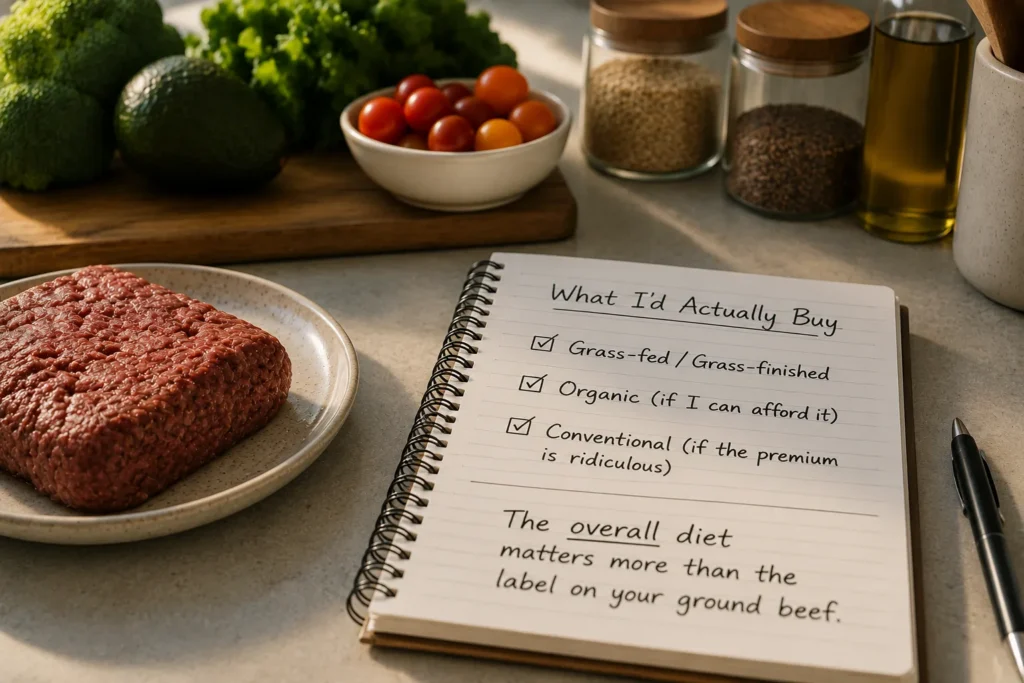
If the price difference is small, I would go with grass-fed or grass-finished.
If I care about organic production standards too and can afford it, I would consider organic.
If the premium is ridiculous, I am buying the conventional beef and moving on with my life.
Because here is the thing:
The overall diet matters more than the label on your ground beef.
That is the part people forget.
Frequently Asked Questions
Is grass-fed beef worth the extra cost?
It can be, especially if you eat beef regularly and the price premium is reasonable. Grass-fed beef has a different nutritional profile, including more omega-3 fatty acids and CLA, but the overall health advantage for an individual person is less certain than the nutritional differences themselves.
Is grass-fed beef healthier than grain-fed beef?
Grass-fed beef generally contains more omega-3 fatty acids and CLA and can contain higher concentrations of certain vitamins and antioxidant compounds. However, those differences do not automatically prove a large health advantage.
Does grass-fed beef have more omega-3?
Yes. Grass-based feeding generally increases omega-3 fatty acids in beef compared with grain finishing. However, the amount can vary considerably among individual products.
Is grass-fed beef the same as organic beef?
No. Grass-fed relates to feeding practices, while organic is a USDA certification with additional requirements involving feed, pasture, livestock management, and prohibited substances.
Does organic beef have hormones?
USDA organic livestock cannot receive hormones for growth. Conventional beef cattle may legally receive FDA-approved hormone implants.
Is conventional beef full of antibiotics?
No. Conventional cattle can be treated with antibiotics when medically necessary, and meat is subject to regulations concerning antibiotic residues and withdrawal periods.
Does grass-fed beef have more CLA?
Generally, yes. Grass-based feeding tends to produce beef with higher CLA concentrations than grain finishing. That does not prove that eating grass-fed beef prevents cancer or causes weight loss.
Is grass-fed beef better for inflammation?
Grass-fed beef can have a more favorable fatty-acid profile and higher concentrations of some antioxidant compounds, but there is not enough evidence to say that eating grass-fed beef directly produces a major reduction in inflammation.
The Takeaway
Grass-fed beef is not a scam.
But it is not magic either.
There are real nutritional differences between grass-fed and grain-finished beef. Grass-fed beef generally has more omega-3 fatty acids and CLA, and some studies find higher levels of vitamin E and other antioxidant compounds.
So is grass-fed beef worth paying extra for?
I think it can be.
But do not go broke buying it.
A slightly better steak is not going to save a terrible diet.
The whole picture still matters.
Sources / Research Notes
Key sources: USDA organic standards; FDA hormone implant guidance; research comparing grass- and grain-finished beef, including recent 2026 commercial North American sample analysis.